

Table of Contents
Payment history is the biggest factor in your FICO score, making up about 35%. Keeping your credit card balances below 30% of your limits, and ideally under 10%, can help your score quickly. In the US you can check your credit reports from all three bureaus for free at AnnualCreditReport.com. Errors on your credit report can be disputed for free and fixing them can raise your score. In the UK, registering on the electoral roll is one of the easiest ways to improve your credit score.
Your credit score affects much more than whether you can get a credit card. It can decide the interest rate on your mortgage or car loan, whether a landlord rents to you and even what you pay for some types of insurance.
With interest rates still high in both the US and the UK, a better score can save you thousands of dollars or pounds over the life of a loan.
The good news is that anyone can improve their credit score. It does not take special tricks, and you do not need to pay a company to do it for you. Here are 15 simple steps that really work, along with how credit scores are calculated and how long it takes to see results.
What Is a Credit Score?
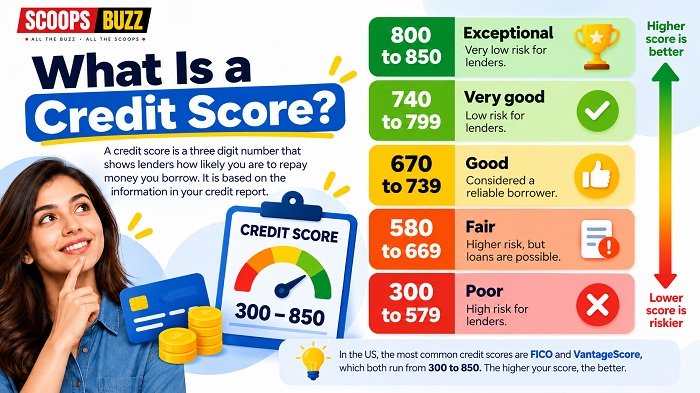
A credit score is a three digit number that shows lenders how likely you are to repay money you borrow. It is based on the information in your credit report, which lists your loans, credit cards and payment history.
In the US, the most common scores are FICO and VantageScore, which both run from 300 to 850. The higher your score, the better.
| FICO score range | Rating |
| 800 to 850 | Exceptional |
| 740 to 799 | Very good |
| 670 to 739 | Good |
| 580 to 669 | Fair |
| 300 to 579 | Poor |
In the UK, each of the three main credit reference agencies, Experian, Equifax and TransUnion, uses its own scale. Lenders also use their own scoring systems, so there is no single “UK credit score.”
How Your FICO Score Is Calculated
The 5 Factors Behind Your FICO Score
Five key factors determine your FICO score. Understand each factor at a glance.
Five factors combine to make up the complete score breakdown.
Payment History
35%Amounts Owed
30%Length of Credit History
15%New Credit
10%Credit Mix
10%💡 The Biggest Factors: 65%
Payment History (35%) + Amounts Owed (30%) account for approximately 65% of FICO scoring weights. Pay on time and keep credit balances low.
Note: FICO factor percentages are approximate scoring weights, not a formula that calculates every individual score exactly. Their impact can vary depending on your credit profile.
If you want to improve your credit score, it helps to know what goes into it. FICO uses five main factors:
| Factor | Share of score |
| Payment history | About 35% |
| Amounts owed (credit utilization) | About 30% |
| Length of credit history | About 15% |
| New credit | About 10% |
| Credit mix | About 10% |
Payment history and the amount you owe make up nearly two thirds of your score. That is where most people can make the biggest difference.
15 Ways to Improve Your Credit Score
15 Smart Ways to Boost Your Credit Score
Small, consistent financial habits can help build a stronger credit profile. Start with these practical steps.
| Step | Credit Tip | Key Action |
|---|---|---|
| 01 | Pay Every Bill on Time | → Set up autopay |
| 02 | Catch Up on Late Accounts | → Clear overdue payments |
| 03 | Lower Card Balances | → Aim below 30% usage |
| 04 | Pay Before Statement Date | → Reduce reported balance |
| 05 | Request a Higher Credit Limit | → Check for hard inquiry |
| 06 | Keep Old Cards Open | → Preserve available credit |
| 07 | Check Credit Reports | → Find reporting errors |
| 08 | Dispute Credit Report Errors | → File a free dispute |
| 09 | Limit New Applications | → Apply only when needed |
| 10 | Become an Authorized User | → Choose a well-managed card |
| 11 | Try a Secured Credit Card | → Pay in full monthly |
| 12 | Consider a Credit Builder Loan | → Build payment history |
| 13 | Report Rent and Utility Bills | → Check reporting services |
| 14 | Deal With Collections | → Agree on a payment plan |
| 15 | Be Patient and Consistent | → Build healthy habits |
Pay every bill on time, lower your credit card balances, and check your credit reports for errors. Consistent habits can help you build a healthier credit profile over time.
Note: Credit score improvements depend on your individual credit history, the scoring model used, and the information in your credit reports. Results and timing may vary.
Here are the steps, starting with the ones that matter most. You do not need to do all of them at once to improve your credit score.
1. Pay Every Bill on Time
This is the single most important step if you want to improve your credit score. One payment that is 30 days or more late can drop your score sharply and stay on your report for up to seven years.
Set up automatic payments for at least the minimum amount due on every card and loan, so you never miss a due date.
2. Catch Up on Late Accounts
If you are behind on any payments, get current as soon as you can. The longer an account stays overdue, the more it hurts your score. If you are struggling, call your lender. Many offer hardship plans.
3. Lower Your Credit Card Balances
Your credit utilization is how much of your available credit you are using. If you have a $10,000 limit and owe $5,000, your utilization is 50%.
Experts usually suggest keeping utilization below 30%, and people with the highest scores often keep it under 10%. Paying down card balances is one of the fastest ways to improve your credit score, because utilization is recalculated each month.
4. Pay Before the Statement Date
Card companies usually report your balance to the credit bureaus on your statement date, not your payment due date. Paying down your balance a few days before the statement closes means a lower balance is reported, even if you pay in full every month.
5. Ask for a Higher Credit Limit
A higher limit lowers your utilization, as long as you do not spend more. Many card issuers let you request an increase online. Ask whether it will cause a “hard” credit check, which can dip your score slightly for a short time.
6. Do Not Close Old Credit Cards
Closing a card reduces your total available credit, which can push your utilization up. It can also shorten the average age of your accounts over time. If an old card has no annual fee, it is usually better to keep it open and use it now and then.
7. Check Your Credit Reports for Errors
Mistakes on credit reports are more common than many people think, and fixing them is a free way to improve your credit score. A wrong late payment, an account that is not yours or an old debt listed twice can all drag your score down.
In the US, you can get free credit reports from Equifax, Experian and TransUnion every week at AnnualCreditReport.com, the official site authorized by federal law.
8. Dispute Any Mistakes
If you find an error, you can dispute it with the credit bureau for free, online or by mail. The bureau usually has 30 days to investigate. Include copies of any documents that support your claim.
The Consumer Financial Protection Bureau also explains your dispute rights on its website. For more background on how US scores developed, see credit score in the United States.
9. Limit New Credit Applications
Each time you apply for credit, the lender may do a hard inquiry, which can lower your score by a few points. Several applications in a short time can make you look like a risk.
When shopping for a mortgage or car loan, try to do all your rate shopping within a short period, usually a couple of weeks. Scoring models generally count several inquiries for the same type of loan as one.
10. Become an Authorized User
If a family member or partner has a credit card with a long history of on time payments and a low balance, they can add you as an authorized user. Their good history may then appear on your credit report and help your score.
Make sure the card issuer reports authorized users to the credit bureaus, and that the account holder manages the card well.
11. Try a Secured Credit Card
If you have little or no credit history, or your score is very low, a secured credit card can help. You put down a cash deposit, which usually becomes your credit limit. Use it for small purchases and pay it off in full each month to build a positive record.
12. Consider a Credit Builder Loan
A credit builder loan is another way to improve your credit score from scratch. Offered by many credit unions and online lenders, holds the money you borrow in a savings account while you make monthly payments. Once it is paid off, you get the money, and your on time payments are reported to the bureaus.
13. Get Credit for Rent and Utility Bills
Some services now let you add rent, phone and utility payments to your credit report. This can be especially helpful if you have a thin credit file. Check whether the service charges a fee and which bureaus it reports to.
14. Deal With Collections
If you have an account in collections, contact the collector to arrange payment. Newer FICO and VantageScore models ignore paid collection accounts, and medical debt is treated more lightly than other debt by many models.
Always get any agreement in writing before you pay.
15. Be Patient and Keep Going
Good credit is built over time, and it takes patience to improve your credit score. Negative items fade as they get older, and every month of on time payments helps. Keep using credit lightly and paying on time, and your score will usually rise steadily.
How Long Does It Take to Improve Your Credit Score?
Improve Your Credit Score Faster
Every credit improvement takes a different amount of time. Explore the typical timelines for common credit-building actions.
Pay Down Card Balances
Reduce your credit utilization.
Fix Credit Report Errors
Dispute inaccurate account information.
Become an Authorized User
Join a well-managed credit card account.
Recover From Late Payments
Build a new record of on-time payments.
Build Credit From Scratch
Establish enough credit history for a score.
Recover From Bankruptcy or Foreclosure
Rebuild your credit profile over time.
→ Want to See Results Sooner?
Paying down credit card balances may help relatively quickly. Keep utilization low, pay every bill on time, and allow time for lenders to report updated information.
Note: These are approximate timeframes, not guaranteed results. Actual changes depend on your credit history, reporting dates, scoring model, and the information in your credit reports.
How long it takes to improve your credit score depends on what is holding it down.
| Action | How quickly you may see results |
| Paying down card balances | 30 to 60 days |
| Fixing a credit report error | 30 to 45 days after the dispute |
| Becoming an authorized user | One to two billing cycles |
| Recovering from a late payment | Several months to a few years |
| Building credit from scratch | About six months for a first score |
| Bankruptcy or foreclosure | Several years |
Lowering your utilization is usually the fastest way to raise your credit score, while serious problems like bankruptcy take much longer to recover from.
How to Improve Your Credit Score in the UK
Register on the Electoral Roll
→ Confirm your addressCheck All Three Credit Reports
→ Review your credit fileAvoid Multiple Credit Applications
→ Use soft-search checkersBreak Old Financial Links
→ Update financial associationsUse a Credit Builder Card
→ Pay on time and in fullKeep Your Address History Updated
→ Keep your details currentCredit scoring works a little differently in the UK, but the basics you need to improve your credit score are the same. Pay on time, keep balances low and check your reports. A few extra tips apply:
- Register on the electoral roll. Lenders use it to confirm your name and address. Not being registered is one of the most common reasons for a weak credit file, and you can register online in a few minutes.
- Check all three reports. You can see your statutory credit report from Experian, Equifax and TransUnion for free. Several free apps also show your file and score.
- Avoid lots of applications. Use eligibility checkers that run a “soft search,” which does not affect your file.
- Break financial links. If you once had a joint account with an ex partner, their credit history may be linked to yours. You can ask the agencies to remove the link once accounts are closed.
- Use a credit builder card carefully if you have a thin file, and pay it off in full.
- Keep your address history up to date, and avoid moving accounts around too often.
Common Credit Score Myths
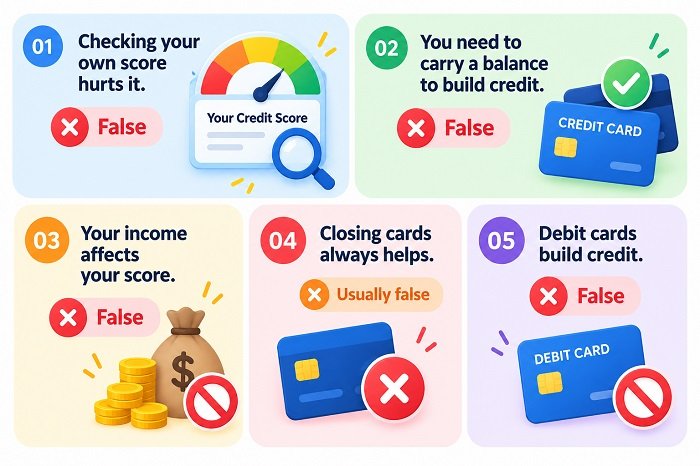
Checking your own score hurts it. False. Checking your own credit is a “soft” inquiry and does not affect your score.
You need to carry a balance to build credit. False. Paying your card in full every month is best. You do not need to pay interest to build a good score.
Your income affects your score. False. Income is not part of your credit score, although lenders may ask about it separately.
Closing cards always helps. Usually false. It can raise your utilization and lower your score.
Debit cards build credit. False. Debit card use is not reported to the credit bureaus.
Watch Out for Credit Repair Scams
Be careful of companies that promise to “erase bad credit” or raise your score by 100 points overnight. Nobody can legally remove accurate negative information from your report.
In the US, credit repair companies are not allowed to charge you before they have done the work. Anything they can do, you can do yourself for free, including disputing errors.
Why a Better Credit Score Matters Now
A stronger credit score can make borrowing more affordable and open doors to better financial opportunities.
Lower Interest Rates
A stronger credit profile may help you qualify for more competitive borrowing rates.
Better Mortgage Options
Your credit profile can influence the mortgage deals and rates available to you.
Smarter Loan Costs
A better score may help reduce borrowing costs on car loans and personal loans.
More Financial Flexibility
You may have better access to credit card rewards and find it easier to rent a home. Insurance benefits vary by location.
Why it matters now: When interest rates are high, even a small difference in your borrowing rate can add up to substantial savings over the life of a long-term loan.
Approval, interest rates and available benefits depend on your credit profile, lender criteria and location.
Interest rates are higher than they were a few years ago in both the US and the UK. That makes it even more important to improve your credit score.
A borrower with an excellent score can qualify for a much lower rate on a mortgage than someone with a fair score. On a typical 30 year home loan, the difference can add up to tens of thousands of dollars in interest. The same is true for car loans and personal loans.
A strong score can also help you qualify for the best credit card rewards, lower insurance premiums in many states and an easier time renting a home.
Quick Checklist to Improve Your Credit Score
| Do | Avoid |
| Pay every bill on time | Missing payments |
| Keep card balances low | Maxing out cards |
| Check your reports regularly | Ignoring errors |
| Keep old accounts open | Closing your oldest card |
| Apply for credit only when needed | Many applications at once |
| Register on the electoral roll (UK) | Paying for “credit repair” promises |
More From ScoopsBuzz
- Fed meeting October 2026: what the decision means for your money
- Black Friday 2026: dates, early deals and how to avoid overspending
Frequently Asked Questions
What is the fastest way to improve your credit score?
Paying down your credit card balances to lower your credit utilization is usually the fastest way. Fixing errors on your credit report can also help quickly.
What is a good credit score?
On the FICO scale, a score of 670 or higher is generally considered good, and 740 or above is very good.
Does checking my credit score lower it?
No. Checking your own score is a soft inquiry and does not affect it.
How often can I get a free credit report?
In the US, you can get free reports from all three bureaus every week at AnnualCreditReport.com.
How long do late payments stay on my credit report?
Late payments can stay on your US credit report for up to seven years, but their impact fades over time.
How can I improve my credit score in the UK?
Register on the electoral roll, pay bills on time, keep balances low and check your reports with Experian, Equifax and TransUnion.
Does paying off a loan early help my credit score?
It can lower the amount you owe, but closing an installment loan may not always raise your score right away.
Disclaimer: This article is for general information only and is not financial advice.
Sources: myFICO, Consumer Financial Protection Bureau, Federal Trade Commission, AnnualCreditReport.com, Experian, Equifax, TransUnion


1 Comment