


Table of Contents
Open enrollment 2027 on HealthCare.gov runs from November 1, 2026, to January 15, 2027. Sign up by December 15 for coverage that starts January 1. The enhanced premium subsidies expired at the end of 2025, so the 400% of poverty level “subsidy cliff” is back. Insurers proposed a median premium increase of about 15% for 2027, after a roughly 20% rise for 2026. Do not rely on automatic re-enrollment. Compare plans, because your current one may now cost much more.
Millions of Americans who buy their own health insurance will need to shop carefully this fall. Premiums are rising again, and the extra financial help that kept costs down for the past few years is gone.
Open enrollment 2027 for Affordable Care Act marketplace plans begins on Sunday, November 1. It is the main chance each year to sign up for a health plan, switch plans or update your income to see what help you can get.
Here is everything you need to know about open enrollment 2027, including the key dates, why costs are going up, who still qualifies for subsidies and how to find a cheaper plan.
Open Enrollment 2027 Dates
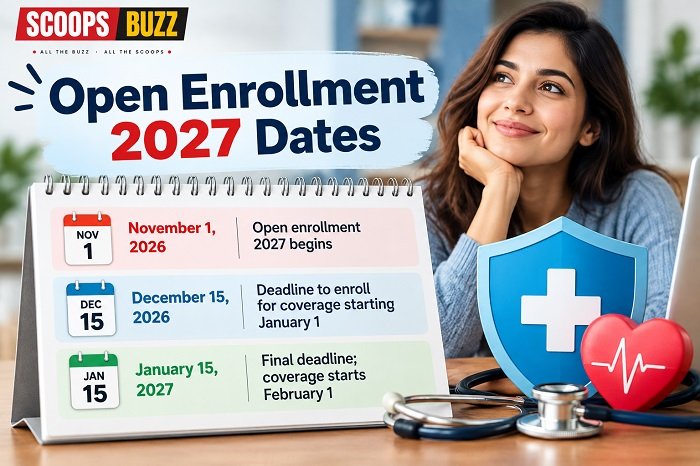
If your state uses HealthCare.gov, the dates are:
| Date | What it means |
| November 1, 2026 | Open enrollment 2027 begins |
| December 15, 2026 | Deadline to enroll for coverage starting January 1 |
| January 15, 2027 | Final deadline; coverage starts February 1 |
Some states run their own marketplaces, including California, New York, New Jersey, Pennsylvania, Massachusetts and Washington, among others. Their dates can be different and are sometimes longer, so check your state exchange’s website.
You can start shopping and comparing plans on HealthCare.gov.
Who Needs to Pay Attention
Who Needs to Pay Attention
Open enrollment 2027 matters most for people who:
- Buy their own health insurance, such as self-employed workers, freelancers, gig workers and small business owners.
- Retired early and are not yet old enough for Medicare at 65.
- Work for an employer that does not offer health coverage.
- Are currently uninsured and need health insurance coverage.
Open enrollment 2027 matters most for people who:
- Buy their own health insurance, such as self employed workers, freelancers, gig workers and small business owners
- Retired early and are not yet old enough for Medicare at 65
- Work for an employer that does not offer health coverage
- Are currently uninsured
If you get insurance through your job, your employer will have its own enrollment period. If you are 65 or older, Medicare open enrollment is a separate process, running from October 15 to December 7.
Why Health Insurance Premiums Are Rising

Premiums for marketplace plans are going up again in 2027, which is why open enrollment 2027 matters so much.
According to an analysis by health policy group KFF of filings from 276 insurers, the median proposed increase for 2027 is about 15% before subsidies. That follows a median increase of roughly 20% for 2026.
Increases vary widely by state. Proposed rises range from around 3% in Vermont to about 29% in Arizona. In New York, regulators approved about 6% after insurers asked for around 20%.
Insurers point to several reasons:
- Higher medical costs, including hospital prices and expensive new drugs
- Rising use of care, especially specialty drugs
- The end of the enhanced subsidies, which insurers expect to push healthier people out of the market, leaving a sicker and more costly pool of customers
What Happened to the Enhanced Subsidies?
From 2021 to 2025, Congress provided extra help known as enhanced premium tax credits. They lowered monthly premiums for most marketplace customers and extended help to middle income families for the first time.
Those enhanced subsidies expired at the end of 2025.
In January 2026, the House of Representatives passed a three year extension. But the Senate has not acted, and nothing has been signed into law. That means the original ACA rules apply for open enrollment 2027.
For many people, that has made coverage much more expensive. Some families who paid little or nothing for a plan in 2025 now face much higher monthly bills.
The Subsidy Cliff Is Back
The Subsidy Cliff Is Back
Under the original ACA rules, premium tax credits stop completely for people who earn more than four times the federal poverty level, or 400% FPL. This is known as the subsidy cliff.
If your household income goes even a few dollars above the applicable limit, you could lose eligibility for premium tax credits under the original ACA rules.
2027 Coverage: 400% of Federal Poverty Level
Based on the 2026 poverty guidelines for the lower 48 states and Washington, DC:
| Household Size | 400% of Poverty Level |
|---|---|
| 1 Person | $63,840 |
| 4 People | $132,000 |
Alaska and Hawaii use higher amounts.
If your income is below the cliff, you may still qualify for a subsidy that limits how much of your income you pay for a benchmark silver plan.
When applying for health insurance, estimate your household income accurately. Contributing more to a retirement account or health savings account can sometimes lower your counted income.
Under the original ACA rules, premium tax credits stop completely for people who earn more than four times the federal poverty level, or 400% FPL. This is known as the subsidy cliff.
Based on the 2026 poverty guidelines used for 2027 coverage in the lower 48 states and Washington, DC, 400% of the poverty level is about:
| Household size | 400% of poverty level |
| 1 person | $63,840 |
| 4 people | $132,000 |
Alaska and Hawaii use higher amounts.
If your income is just above the cliff, even by a few dollars, you lose all help. If it is below, you may still qualify for a subsidy that limits how much of your income you pay for a benchmark silver plan.
That is why it is so important to estimate your income carefully when you apply. Contributing more to a retirement account or health savings account can sometimes lower your counted income.
Who Still Gets Help?
Who Still Gets Help?
Subsidies have not disappeared. Most marketplace customers still qualify for some financial assistance to make health insurance more affordable.
At the start of 2026, about 87% of marketplace customers received financial assistance.
If your household income is between 100% and 400% of the federal poverty level, you may qualify for a premium tax credit in 2027.
01. Premium Tax Credits
These subsidies help eligible households reduce their monthly health insurance premiums through the Marketplace.
02. Cost Sharing Reductions
People with lower incomes may qualify for reduced deductibles and copays, but they must choose a Silver health plan.
03. Medicaid: Another Way to Get Coverage
In states that expanded Medicaid, adults with very low incomes may qualify for Medicaid instead of a Marketplace health insurance plan.
Subsidies have not disappeared. Most marketplace customers still qualify for some help.
At the start of 2026, about 87% of marketplace enrollees received a subsidy. If your household income is between 100% and 400% of the poverty level, you may qualify for a premium tax credit in 2027.
People with lower incomes may also qualify for cost sharing reductions, which lower deductibles and copays, but only if they choose a silver plan.
In states that expanded Medicaid, adults with very low incomes may qualify for Medicaid instead of a marketplace plan.
Other Changes for Open Enrollment 2027
Other Changes for Open Enrollment 2027
Several important policy changes could affect how you enroll, qualify for subsidies, and manage your health insurance costs in 2027. Here is a quick breakdown:
| Policy Change | What You Need to Know |
|---|---|
|
TAX UPDATE No More Repayment Limits |
Starting with the 2026 tax year, if you receive more premium subsidy than you qualify for based on your final income, you may have to repay the full excess amount at tax time. |
|
ENROLLMENT Low-Income Special Enrollment Ended |
The monthly special enrollment period for people earning under 150% of the federal poverty level has been repealed. |
|
ELIGIBILITY New Limits for Some Immigrants |
From January 1, 2027, premium tax credit eligibility is limited to certain immigrant groups, including lawful permanent residents. |
|
COST UPDATE Higher Out-of-Pocket Limits |
The maximum annual cost for covered care is expected to rise to approximately $12,000 for an individual and $24,000 for a family, according to benefit advisers. |
|
2028 CHANGE Automatic Re-Enrollment |
Automatic re-enrollment continues for 2027 if your existing plan remains available. However, this feature is scheduled to end for 2028. |
Several other rules have changed for open enrollment 2027:
- No more repayment limits. Starting with the 2026 tax year, if you get more subsidy than you should during the year because your income turns out higher, you may have to repay all of it at tax time. Previously, repayment was capped for many people.
- Low income special enrollment ended. The monthly special enrollment period for people earning under 150% of the poverty level has been repealed.
- New limits for some immigrants. From January 1, 2027, premium tax credits are limited to certain groups, such as lawful permanent residents.
- Higher out of pocket limits. The maximum you can pay for covered care in a year is set to rise to about $12,000 for an individual and $24,000 for a family, according to benefit advisers.
- Auto re-enrollment still applies for 2027 if your plan continues, but it is scheduled to end for 2028.
Do Not Just Let Your Plan Renew
If you do nothing, HealthCare.gov will usually renew your current plan or move you to a similar one. That might be the easiest option, but it may not be the cheapest.
With subsidies lower and premiums higher, your current plan could cost much more in 2027 than it did this year. Another plan, even from the same insurer, could save you hundreds of dollars.
Experts recommend that everyone log in, update their income and compare plans during open enrollment 2027.
How to Find a Cheaper Health Plan
How to Find a Cheaper Health Plan
Update Your Income: Estimate your expected 2027 income carefully because your subsidy depends on it.
Compare Metal Levels: Compare Bronze, Silver and Gold plans to find the right balance between premiums and deductibles.
Calculate Total Costs: Consider monthly premiums, deductibles and expected copays, not just the monthly price.
Check Doctors and Drugs: Make sure your preferred doctors, hospitals and prescriptions are covered.
Consider an HSA: Check whether your plan is HSA-eligible to save for qualified medical expenses with tax advantages.
Get Free Assistance: Contact trained navigators or certified assisters for free enrollment guidance.
Check Employer Coverage: Compare a family member’s employer-sponsored insurance with your Marketplace options.
- Update your income. Your subsidy depends on your expected 2027 income. A careful, honest estimate matters more than ever with the cliff back.
- Compare all metal levels. Bronze plans have lower premiums but higher deductibles. Silver plans may come with extra savings if your income is low. Gold plans cost more each month but less when you get care.
- Look at the total cost, not just the monthly premium. Add up the premium plus the deductible and likely copays for the care you expect to use.
- Check your doctors and drugs. Make sure your doctors, hospitals and prescriptions are covered before you switch.
- Consider a health savings account. Many bronze plans are HSA eligible, which lets you save for medical costs tax free.
- Get free help. Trained navigators and certified assisters can help you compare plans at no cost.
- Check your employer options. If a family member’s employer offers coverage, compare it with your marketplace options.
Open Enrollment 2027 Checklist
Before you sign up, gather what you need so the process goes smoothly:
- Social Security numbers for everyone in your household who needs coverage
- Income details, such as pay stubs, W2 forms or your most recent tax return
- Expected income for 2027, including any changes like a new job, retirement or side income
- Current health plan details, if you have one, including your plan ID
- A list of your doctors and prescriptions, so you can check they are covered
- Information about job based coverage available to anyone in your household
Set aside some time before December 15 so you can compare several plans without rushing. Many people wait until the final days, when help lines are busiest.
Tips for Self Employed and Gig Workers
Freelancers and gig workers often find it hardest to estimate their income. To get it right during open enrollment 2027:
- Use last year’s tax return as a starting point, then adjust for any changes you expect.
- Remember that your marketplace income is generally based on your adjusted gross income, after business expenses.
- Update your application during the year if your income rises or falls sharply. That can help you avoid a large bill at tax time.
Bronze, Silver, Gold: What Is the Difference?
| Plan level | Monthly premium | Costs when you get care | Best for |
| Bronze | Lowest | Highest | Healthy people who want protection against big bills |
| Silver | Medium | Medium | People eligible for cost sharing reductions |
| Gold | Higher | Lower | People who expect to use a lot of care |
| Platinum | Highest | Lowest | People with high medical needs (not offered everywhere) |
Watch Out for Scams and Junk Plans
Watch Out for Scams and Junk Plans
During Open Enrollment 2027, be careful with calls, texts and advertisements offering “cheap Obamacare plans.” Some brokers may enroll people without their permission, while others sell short-term or limited plans that may not cover pre-existing conditions or major medical costs.
Always verify the plan and the person offering it before sharing personal information or agreeing to enroll.
3 Ways to Protect Yourself
Use Trusted Enrollment Channels: Enroll directly through HealthCare.gov or your state exchange, or work with a licensed agent you trust.
Protect Your Personal Information: Never share sensitive personal details with someone who contacts you unexpectedly.
Monitor Your Account: Check your Marketplace account regularly to make sure nobody has changed your health insurance plan without your permission.
During open enrollment 2027, be careful with calls, texts and ads offering “cheap Obamacare plans.” Some are from brokers who sign people up for plans without their permission, while others sell short term or limited plans that do not cover pre existing conditions or major medical costs.
To protect yourself:
- Enroll directly through HealthCare.gov or your state exchange, or with a licensed agent you trust.
- Never give your personal details to someone who calls you out of the blue.
- Check your account regularly to make sure no one has changed your plan.
What if You Miss the Deadline?
After January 15, you can usually only sign up if you have a qualifying life event, such as losing other health coverage, moving, getting married or having a baby. This is called a special enrollment period.
If you miss the open enrollment 2027 deadline and do not qualify for a special enrollment period, you may have to wait until next year’s open enrollment to get marketplace coverage.
Will Congress Bring Back the Subsidies?
It is possible, but uncertain, and it may not happen before open enrollment 2027 ends. The House has passed an extension, and supporters argue it would keep coverage affordable for millions of families. Opponents point to the cost, which the Congressional Budget Office has estimated at tens of billions of dollars a year, and argue the extra help should be more targeted.
Any change would need to pass the Senate and be signed by President Trump. If that happens during open enrollment, HealthCare.gov would likely update prices. For now, plan based on the rules as they stand.
For detailed research on premiums and subsidies, health policy group KFF publishes regular analysis and calculators.
More From ScoopsBuzz
- Social Security COLA 2027: how much your check will go up (plus Medicare open enrollment)
- How to improve your credit score: 15 simple steps that really work
Frequently Asked Questions
When is open enrollment 2027?
On HealthCare.gov, it runs from November 1, 2026, to January 15, 2027. State exchanges may have different dates.
What is the deadline for coverage starting January 1?
You must enroll by December 15, 2026.
Did the enhanced ACA subsidies end?
Yes. They expired at the end of 2025, and Congress has not passed an extension into law.
How much are premiums going up in 2027?
Insurers proposed a median increase of about 15% before subsidies, but changes vary widely by state.
What is the subsidy cliff?
Under the original ACA rules, people earning more than 400% of the federal poverty level do not qualify for any premium tax credit.
Will my plan renew automatically
In most cases, yes, for 2027. But you should still compare plans, because your renewed plan may cost more.
Can I get free help choosing a plan?
Yes. Navigators and certified assisters offer free help. Find them through HealthCare.gov.
Disclaimer: This article is for general information only and is not health insurance, financial or tax advice.
Sources: HealthCare.gov, KFF, Champion Benefit Advisors, HealthNerd, Jolt Journal