

Table of Contents
Election Day 2026 is Tuesday, November 3. All 435 House seats, 35 Senate seats and 36 governorships are on the ballot. The first polls close at 6 p.m. Eastern in parts of Indiana and Kentucky, and the last close in Alaska at 1 a.m. Eastern. More than 30 million early ballots had been cast nationwide by October 27, according to trackers of state data. Some close races may take days to call, especially in states that count mail ballots arriving after Election Day.
Americans head to the polls next Tuesday in the first nationwide election since 2024, and millions have already voted.
Election Day 2026 falls on Tuesday, November 3. Voters will choose every member of the House of Representatives, a third of the Senate, 36 governors and thousands of state and local officials. The results will decide which party controls Congress for the last two years of President Donald Trump’s term.
Here is a simple guide to Election Day 2026, including how to vote, what to bring, when polls close and when the results could be known.
When Is Election Day 2026?
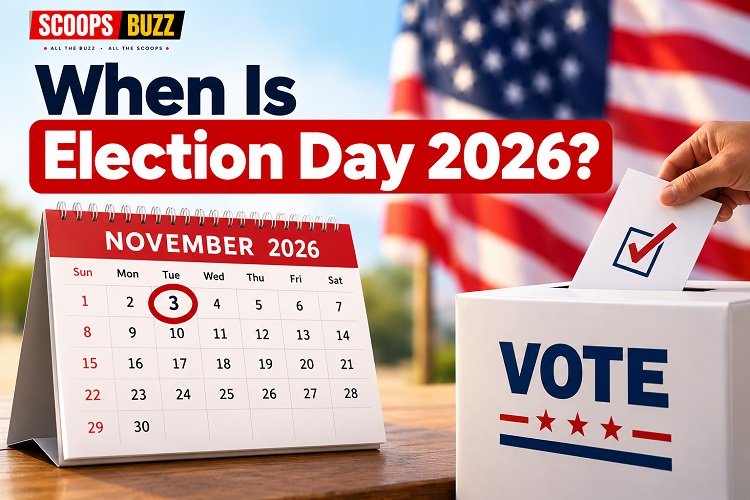
Election Day is Tuesday, November 3, 2026. By federal law, it is held on the Tuesday after the first Monday in November.
Remember that clocks fall back one hour on Sunday, November 1, two days before the election. Double check your polling place hours after the time change.
Election Day is not a federal holiday, but some states and employers give workers time off to vote. Many states require employers to allow time to vote, so check your state’s rules if your work hours make it hard to get to the polls.
What Is on the Ballot?
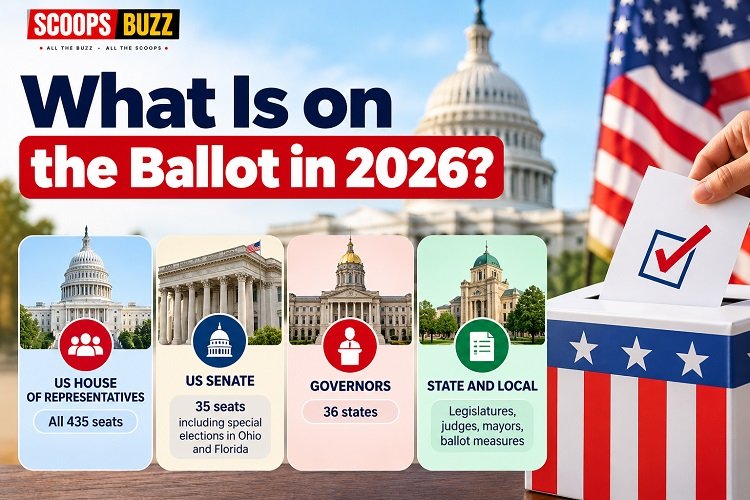
| Office | Seats up |
| US House of Representatives | All 435 seats |
| US Senate | 35 seats, including special elections in Ohio and Florida |
| Governors | 36 states |
| State and local | Legislatures, judges, mayors, ballot measures |
Republicans currently hold the Senate 53 to 47 and also have a narrow majority in the House. A party needs 218 seats to control the House. In the Senate, a 50 to 50 tie would be broken by Vice President JD Vance, so Democrats would need 51 seats to take control.
For a closer look at the key races, see our guide to the Senate races to watch.
How to Vote on Election Day 2026
Ready to Vote? Follow These 5 Steps
Your quick guide to Election Day — November 3, 2026.
Check Your Voter Registration
Find Your Assigned Polling Place
Check Your State’s Voter ID Rules
Confirm Your Polling Hours
Join the Line Before Polls Close
ALL THE BUZZ · ALL THE SCOOPS
If you have not voted early, here is how to vote in person on Election Day 2026:
- Check you are registered. Many states let you check your registration online in a minute.
- Find your polling place. Your polling place may have changed since the last election. Your county or state election office website will list it.
- Check what ID you need. Rules vary by state (see below).
- Know your hours. Most polls open between 6 a.m. and 8 a.m. and close between 7 p.m. and 9 p.m. local time.
- Get in line before closing time. In every state, if you are in line when polls close, you have the right to vote.
You can find official links to your state’s election office, registration tools and deadlines at Vote.gov, the US government’s voting website.
What ID Do You Need to Vote?
Voter ID rules for Election Day 2026 depend on where you live.
About three dozen states ask or require voters to show some form of identification at the polls. Some require a photo ID such as a driver’s license, passport or state ID card. Others accept non-photo documents like a utility bill or bank statement. The rest identify voters in other ways, such as by signature.
You can see a state by state summary of voter identification laws in the United States, but always confirm the rules with your own state election office.
If you do not have the right ID, do not leave without voting. In most states you can cast a provisional ballot, which will be counted once your eligibility is confirmed.
Can You Still Register to Vote?
Still Time to Register to Vote?
Same-Day Registration: Some states and Washington, DC, let eligible voters register and vote on Election Day. Check your state’s official rules.
In many states, the registration deadline has already passed. But more than 20 states, plus Washington, DC, allow same day registration, which means you can register and vote at the same time on Election Day 2026. You will usually need proof of where you live.
Check your state’s rules before you go, so you know exactly what documents to bring.
Early Voting Turnout So Far
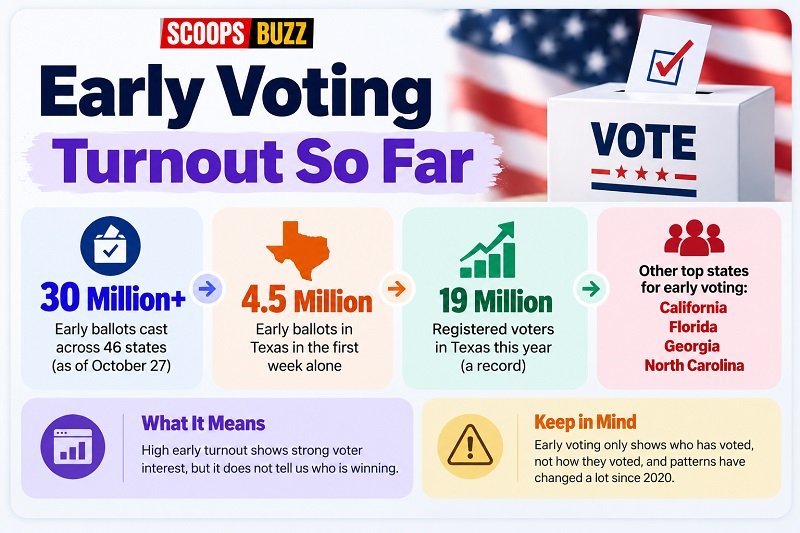
Early voting ahead of Election Day 2026 has been strong in many states.
By October 27, more than 30 million early ballots had been cast across 46 states, according to trackers that compile state and county data. Texas led the way with about 4.5 million ballots in the first week of early voting alone, followed by California, Florida, Georgia and North Carolina.
In Texas, Harris County and Dallas County both set first day early voting records. A record 19 million Texans are registered to vote this year.
Early turnout does not tell us who is winning. Experts warn that it only shows who has voted, not how they voted, and patterns have changed a lot since 2020.
Mail Ballot Deadlines
If you have a mail ballot, do not wait until Election Day 2026. Each state has its own deadline.
In most states, your ballot must arrive by the time polls close on Election Day. In others, it must be postmarked by Election Day and arrive within a few days after.
In June, the Supreme Court upheld a Mississippi law that allows mail ballots arriving up to five days after Election Day to be counted, in a 5 to 4 decision in Watson v. Republican National Committee. That means 14 states can keep counting late arriving mail ballots this year, with windows ranging from one day in Texas to 21 days in Washington state.
If it is close to Election Day, many states let you drop your ballot at an official drop box or election office instead of mailing it.
Poll Closing Times on Election Day 2026 (Eastern Time)
When Do Polls Close?
Election Day 2026 • Tuesday, November 3 • All times below are Eastern Time (ET).
During this week, add five hours to Eastern Time. The first polls close at approximately 11 PM UK time, while West Coast polls close around 4 AM on Wednesday, November 4.
ALL THE BUZZ · ALL THE SCOOPS
Here is when the last polls close in each state, in Eastern Time. Some states sit in two time zones, so parts close earlier.
| Time (ET) | States |
| 6 p.m. | Parts of Indiana and Kentucky |
| 7 p.m. | Georgia, South Carolina, Vermont, Virginia, most of Florida, rest of Indiana and Kentucky |
| 7:30 p.m. | North Carolina, Ohio, West Virginia |
| 8 p.m. | Alabama, Connecticut, Delaware, DC, Illinois, Maine, Maryland, Massachusetts, Mississippi, Missouri, New Hampshire, New Jersey, Oklahoma, Pennsylvania, Rhode Island, Tennessee, Florida Panhandle, most of Michigan, Texas and Kansas |
| 8:30 p.m. | Arkansas |
| 9 p.m. | Arizona, Colorado, Iowa, Louisiana, Minnesota, Nebraska, New Mexico, New York, Wisconsin, Wyoming, rest of Michigan, Texas and Kansas |
| 10 p.m. | Montana, Nevada, Utah, most of Idaho and North Dakota |
| 11 p.m. | California, Oregon, Washington, rest of Idaho and North Dakota |
| Midnight | Hawaii, most of Alaska |
| 1 a.m. (Nov. 4) | Western Aleutian Islands, Alaska |
For readers in the UK, add five hours this week. That means the first results will start coming in around 11 p.m. UK time on Tuesday, with West Coast polls closing at 4 a.m. UK time on Wednesday.
When Will We Know the Results of Election Day 2026?
Some races will be called on election night. Others could take days.
News organizations such as the Associated Press call races when one candidate has a clear lead that cannot be overcome. In states that count votes quickly, results can come within hours of polls closing.
Results may be slower in:
- States that accept late mail ballots, such as California, Nevada and Washington.
- States that use ranked choice voting, such as Maine and Alaska, where a second round of counting may be needed if no candidate wins a majority.
- Very close races, which can lead to recounts.
Analysts have noted that several of the House races rated as toss-ups are in states that accept late mail ballots. That means control of the House may not be known on election night if the overall result is close.
Georgia also holds a runoff if no candidate wins more than 50% of the vote, which could push some results into December.
Why Counting Takes Time
A slow count after Election Day 2026 does not mean something is wrong.
Election officials must check signatures, verify voter details and process provisional ballots. Some states do not allow officials to start processing mail ballots until Election Day itself. Counting carefully takes time, and official results are not certified until weeks after the election in most states.
It is normal for leads to shift during the count, as different types of ballots, such as early votes, Election Day votes and mail ballots, are reported at different times.
Your Rights at the Polls
Every voter has rights on Election Day 2026. These include:
- The right to vote if you are in line when polls close.
- The right to a provisional ballot if your name is not on the list.
- The right to help if you have a disability or have trouble reading English.
- The right to vote free from intimidation.
- The right to a new ballot if you make a mistake before you cast it.
If you have a problem, ask a poll worker first. You can also contact your local election office.
Tips for a Smooth Trip to the Polls
6 Smart Tips for a Smooth Voting Day
A little preparation can make your trip to the polls easier.
ALL THE BUZZ · ALL THE SCOOPS
- Go at a quiet time on Election Day 2026. Mid morning and early afternoon are often less busy than before and after work.
- Bring your ID, even if your state does not require it, just in case.
- Look at a sample ballot. Most counties post one online, so you can see every race and ballot measure ahead of time.
- Check the weather. Bring a jacket and water if lines are long.
- Do not take a ballot selfie unless you know it is allowed. Rules on photos inside polling places differ by state.
- Watch out for false information. Get voting details from your official election office, not social media posts or text messages.
What It Means for the UK and Europe
The results of Election Day 2026 matter far beyond America. Control of Congress will shape US policy on trade, tariffs, Ukraine, NATO and the Middle East for the next two years. Financial markets in London and Europe often move on US election results, especially the dollar and US government bonds.
Results from the East Coast will start coming in late Tuesday evening UK time, with most major calls expected on Wednesday.
Election Day 2026: Key Facts
| Fact | Detail |
| Date | Tuesday, November 3, 2026 |
| House seats | All 435 |
| Senate seats | 35 |
| Governor races | 36 |
| Votes needed for House control | 218 |
| First polls close | 6 p.m. ET |
| Last polls close | 1 a.m. ET (Alaska) |
| Early ballots cast | More than 30 million by October 27 |
More From ScoopsBuzz
- 2026 midterm elections: date, what’s at stake and the Senate races to watch
- When does daylight saving time end in 2026? Clocks fall back November 1
Frequently Asked Questions
When is Election Day 2026?
Election Day is Tuesday, November 3, 2026.
What time do polls close on Election Day 2026?
It depends on the state. The first polls close at 6 p.m. Eastern in parts of Indiana and Kentucky. Most close between 7 p.m. and 9 p.m. local time.
How do I find my polling place?
Check your state or county election office website. Vote.gov has links for every state.
Do I need ID to vote?
About three dozen states ask or require ID. Rules vary, so check your state’s requirements before you go.
Can I register to vote on Election Day?
Yes, in more than 20 states and Washington, DC, which offer same day registration.
When will we know who won the House and Senate?
Some races will be called on election night, but close races, especially in states that count late mail ballots, could take several days.
What if I am in line when polls close?
Stay in line. If you are in line by closing time, you have the right to vote.
Sources: Vote.gov, National Conference of State Legislatures, The Green Papers, R Street Institute, Texas Tribune, Call the Map early vote tracker



1 Comment