

Table of Contents
Chancellor John Healey delivers the Autumn Budget 2026 on Wednesday 28 October, shortly after Prime Minister’s Questions. It is the first Budget since Andy Burnham became Prime Minister in July. The government has said it does not plan to raise the main rates of income tax, National Insurance or VAT. Income tax thresholds are frozen until 2031, with the Personal Allowance at £12,570. UK inflation rose to 3.5% in September, and the Bank of England is widely expected to raise interest rates on 5 November.
Chancellor John Healey will stand up in the House of Commons on Wednesday to deliver his first Budget, and millions of households will be watching to see what it means for their pay packets, pensions and bills.
The Autumn Budget 2026 comes at a tough moment. Inflation has climbed again, borrowing costs have jumped and the war involving Iran has pushed up fuel and energy prices. Mr Healey has promised a Budget that will “meet our fiscal rules,” but finding the money may not be easy.
Here is what we know so far about the Autumn Budget 2026, what has already been announced and what could change for you.
When Is the Autumn Budget 2026?
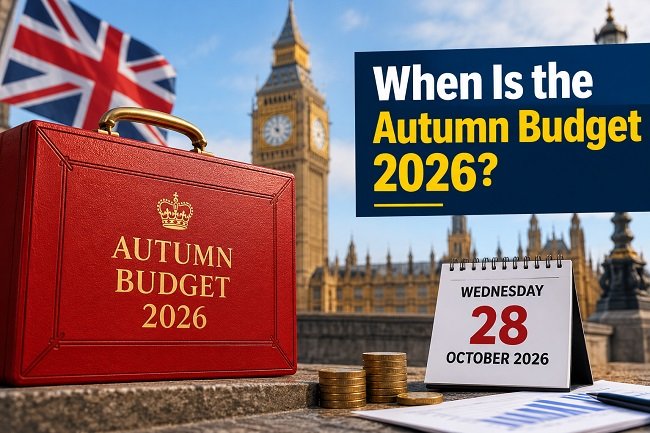
The Autumn Budget 2026 will be delivered on Wednesday 28 October 2026. Mr Healey is expected to start speaking shortly after midday, once Prime Minister’s Questions has finished.
The date is about four weeks earlier than last year’s Budget, which was held in late November.
As usual, the Office for Budget Responsibility will publish its new forecasts for the economy and public finances on the same day. You can read them on the OBR website once the speech is over.
Who Is John Healey?

John Healey became Chancellor of the Exchequer on 20 July 2026, after Andy Burnham took over as Prime Minister and reshaped the Cabinet. Mr Healey previously served as Defence Secretary.
The Autumn Budget 2026 will be his first, and the first under Mr Burnham’s government.
Mr Healey has said he wants a Budget that will “move money and power out of Westminster and into every postcode around Britain.” He has also stressed “fiscal discipline,” saying families and businesses need stability so they can plan ahead.
The Money Problem Facing the Chancellor
Going into the Autumn Budget 2026, the Chancellor has less room to manoeuvre than he would like.
Estimates suggest that more than half of the government’s fiscal headroom has disappeared since the spring, partly because of the economic fallout from the Iran war. Fiscal headroom is the buffer the government keeps between its plans and its own borrowing rules.
Gilt yields, the interest rates the government pays to borrow, have also surged in recent weeks. That makes debt more expensive and squeezes public finances further.
The Institute for Fiscal Studies has warned that Mr Healey faces “fraught choices.” In its view, the options are more tax rises, welfare cuts on a scale Labour MPs have already rejected, or significant cuts to public services. It also said the war means inflation in the coming years will be higher than expected when the OBR last published a full forecast in the spring.
Will Income Tax Go Up in the Autumn Budget 2026?
The government has said it does not plan to raise the main rates of income tax, National Insurance for employees or VAT. Mr Burnham signed up to that Labour pledge when he became leader.
However, he has refused to rule out other tax rises. When challenged by the Conservatives at Prime Minister’s Questions in September, he would not give a guarantee.
The bigger issue for many workers is the freeze on income tax thresholds. The thresholds have been frozen since 2021 and are due to stay frozen until 2031. The Personal Allowance, the amount you can earn before paying income tax, is £12,570 in 2026/27.
When wages rise but thresholds stay put, more people get pulled into paying tax, or into a higher tax band. This is known as fiscal drag. Mr Burnham has said he is frustrated by the freeze and that it will be looked at in the Budget, but there is no promise to change it. Ending the freeze early would cost the Treasury billions of pounds.
Possible Tax Rises Being Discussed
Note: These are reported possibilities ahead of the Autumn Budget 2026, not confirmed tax changes.
Ahead of the Autumn Budget 2026, reports suggest the Treasury has looked at a number of ways to raise money without touching the main rates of income tax, National Insurance or VAT. These include:
- Higher taxes on banks in the City of London
- Higher taxes on the better-off
- More tax from property owners
- Changes to inheritance tax
- A possible land value tax, which would tax the value of land rather than the buildings on it
None of these have been confirmed. Mr Healey has reportedly ruled out bringing capital gains tax rates fully in line with income tax rates.
What Has Already Been Announced?
Note: Figures and scheme details are based on the information provided and may be subject to official confirmation.
Mr Burnham’s government has already set out several cost of living measures since July. These are likely to feature in the Autumn Budget 2026:
- VAT removed from electricity bills. The 5% VAT on household electricity is being cut. It was expected to save around £45 off a typical bill under the October price cap, but it is currently set to last only six months, so many will be watching to see if it is extended beyond March 2027.
- Bus fares capped at £2 across most of England.
- Business rates cuts for pubs, clubs and live music venues.
- “Your First Home” scheme for first-time buyers, allowing people with a 2.5% deposit to get a 20% equity loan.
State Pension and the Triple Lock
Pensioners are watching the Autumn Budget 2026 closely.
The government plans to change the triple lock from April 2030. At the moment, the State Pension rises each year by the highest of inflation, wage growth or 2.5%. Under the new plan, it would rise by the higher of inflation or 2.5%, with a separate mechanism to keep the State Pension in line with earnings over time. Mr Burnham has said the savings would help pay for a National Care Service.
The full new State Pension is expected to be about £13,036 a year in 2027/28. For the first time, that is higher than the £12,570 Personal Allowance.
That has raised fears that people living only on the State Pension could end up owing income tax. Pensions Minister Torsten Bell has confirmed that people whose only income is the State Pension will be exempt. The previous Chancellor, Rachel Reeves, had pledged that from April 2027 these pensioners would no longer have to pay small tax bills through HMRC’s Simple Assessment system. Tax experts say the details are complicated, and the Budget may bring more clarity.
Pensions and Inheritance Tax
| 🏦 |
Pensions & Inheritance Tax Unused pension pots may face inheritance tax from April 2027. |
| 🏠 |
£325,000 Tax-Free Threshold The standard inheritance tax threshold is frozen until 2031. |
| 💷 |
Pension NI Savings Salary-sacrifice National Insurance savings are due to change from 2029. |
Several pension and inheritance tax changes are already on the way:
- Pensions will be counted for inheritance tax from April 2027. That means unused pension pots could face inheritance tax when someone dies.
- The inheritance tax threshold stays at £325,000, plus up to £175,000 extra when a main home is passed to children or grandchildren. Both are frozen until 2031.
- The National Insurance savings on salary sacrifice pension contributions will be reduced from 2029.
The Conservatives, led by Kemi Badenoch, have pledged to take family homes out of inheritance tax altogether, putting pressure on the government over the issue.
ISA Changes Coming
Annual mansion tax surcharge by property value · Expected from April 2028
Savers face changes too, even before any new Autumn Budget 2026 announcements:
| ISA change | When |
| Cash ISA allowance cut to £12,000 for under 65s | April 2027 |
| Lifetime ISA replaced by a new First Time Buyer ISA | April 2028 |
The overall ISA allowance remains £20,000 a year, but under 65s will only be able to put up to £12,000 of that into cash from April 2027. The rest would need to go into stocks and shares or other types of ISA.
The Mansion Tax
The proposed mansion tax applies to qualifying homes in England valued at £2 million or more.
A new annual charge on high value homes in England, widely called the mansion tax, starts in April 2028. It applies to properties worth £2 million or more.
| Property value | Yearly surcharge |
| £2 million to £2.5 million | £2,500 |
| £2.5 million to £3.5 million | £3,500 |
| £3.5 million to £5 million | £5,000 |
| Over £5 million | £7,500 |
There had been speculation that the threshold could be lowered to £1.5 million, but Mr Healey has reportedly ruled that out.
Fuel Duty: Will It Go Up?
Fuel duty has been frozen since 2011, and a temporary 5p cut has been in place since 2022.
Under current plans, fuel duty is set to rise by 3p in January 2027 and another 2p the following March. With petrol and diesel prices already climbing because of the Middle East conflict, there is pressure on the Chancellor to delay or cancel the increase. A change of course in the Autumn Budget 2026 would be popular with drivers, but it would cost the Treasury money it does not have to spare.
Inflation and Interest Rates
The Autumn Budget 2026 lands at a time of rising prices.
UK inflation jumped to 3.5% in September, up from 3.1% in August, according to the Office for National Statistics. It was the highest level in almost a year, driven largely by rising fuel costs. You can see the latest figures on the ONS inflation page.
The Bank of England base rate is currently 3.75%. At its September meeting, three of the nine members of the Monetary Policy Committee voted to raise rates to 4%. The next decision is due on Thursday 5 November, and financial markets see a very high chance of a quarter point rise to 4%.
Unemployment stands at 4.7%.
For households, a rate rise would mean higher costs for people on tracker and variable mortgages, but better returns for savers.
What the Autumn Budget 2026 Could Mean for You
Here is a quick guide to what to watch for in the Autumn Budget 2026 on Wednesday:
| If you are… | Watch for |
| A worker | Any change to the income tax threshold freeze |
| A pensioner | Detail on State Pension tax and the triple lock |
| A saver | ISA rules and any new savings incentives |
| A homeowner | Property taxes, inheritance tax and the mansion tax |
| A first-time buyer | The “Your First Home” scheme and the new ISA |
| A driver | Whether the fuel duty rise goes ahead |
| A business owner | Bank levies, business rates and investment rules |
How to Prepare Before the Budget
Financial advisers say it is wise to plan early for the Autumn Budget 2026 rather than wait for the final announcements. Some simple steps:
- Use your ISA allowance for this tax year if you can, especially if you save mostly in cash.
- Check your pension contributions, including any salary sacrifice arrangement, before rules change.
- Review your will and estate plans if pensions or property could be affected by inheritance tax.
- Fix your mortgage rate if you are worried about further Bank of England rises.
- Keep an eye on energy bills, as the VAT cut is only temporary for now.
What the Opposition Says
The Conservatives have attacked the government over the prospect of tax rises, pointing to Mr Burnham’s refusal to rule them out. Kemi Badenoch’s party has focused on inheritance tax and family homes.
Some Labour MPs, meanwhile, have warned against cuts to welfare and public services, adding to the pressure on Mr Healey to find money elsewhere.
Why the Autumn Budget 2026 Matters Beyond the UK
The Autumn Budget 2026 is closely watched by international investors. The recent rise in UK gilt yields shows that markets are nervous about government borrowing. A Budget seen as credible could help calm bond markets and the pound. One seen as risky could do the opposite, as happened after the mini budget of 2022.
The UK is not alone. The US Federal Reserve and the European Central Bank are also dealing with higher energy prices linked to the Middle East.
More From ScoopsBuzz
- How to lower heating bills this winter: 15 tips that work
- Fed meeting October 2026: will the Fed raise interest rates?
Frequently Asked Questions
When is the Autumn Budget 2026?
It is on Wednesday 28 October 2026. The Chancellor is expected to speak shortly after midday, after Prime Minister’s Questions.
Who is delivering the Budget
Chancellor John Healey, who was appointed on 20 July 2026 by Prime Minister Andy Burnham.
Will income tax go up?
The government says it does not plan to raise the main rates of income tax, National Insurance or VAT. Income tax thresholds remain frozen until 2031.
Will pensioners pay tax on the State Pension?
Pensions Minister Torsten Bell has said people whose only income is the State Pension will be exempt from income tax.
What is changing with ISAs?
From April 2027, under 65s will only be able to put £12,000 a year into a Cash ISA. The Lifetime ISA will be replaced by a First Time Buyer ISA from April 2028.
Will fuel duty go up?
Current plans would add 3p a litre in January 2027 and 2p in March 2027, but the Chancellor could change this.
What is the mansion tax?
An annual surcharge on homes in England worth £2 million or more, starting in April 2028, ranging from £2,500 to £7,500 a year.
Disclaimer: This article is for general information only and is not financial or tax advice. Details may change after the Budget is delivered.
Sources: PensionBee, Brit Brief, Cambridge Network, Institute for Fiscal Studies, Office for National Statistics, Money to the Masses


1 Comment