
Table of Contents
Test your car battery before winter, because cold weather cuts its power and makes engines harder to start. Tire pressure drops about 1 PSI for every 10 degrees Fahrenheit fall in temperature, so check it often. Replace worn wiper blades and fill up with winter washer fluid that will not freeze. Keep an emergency kit in your car with a blanket, scraper, flashlight, phone charger, water and snacks. Electric cars lose range in the cold, so precondition the battery while plugged in.
The first frost is coming, and for millions of drivers, so are dead batteries, flat tires and frozen windshields. A few simple checks now can save you money, stress and a long wait on the side of a cold road.
Roadside assistance services get millions of calls every winter, many of them for problems that could have been avoided.
Whether you live in snowy Michigan, rainy Manchester or anywhere in between, here is how to winterize your car with 15 easy winter car care tips, plus advice for electric car owners and what to keep in your emergency kit.
Why You Should Winterize Your Car
Cold weather is hard on cars. Low temperatures weaken batteries, thicken engine oil, shrink tire pressure and freeze fluids. Snow, ice and road salt add even more wear.
When you winterize your car, you prepare it for these conditions before they cause a breakdown. Most of the steps are cheap or free, and many take only a few minutes.
15 Ways to Winterize Your Car
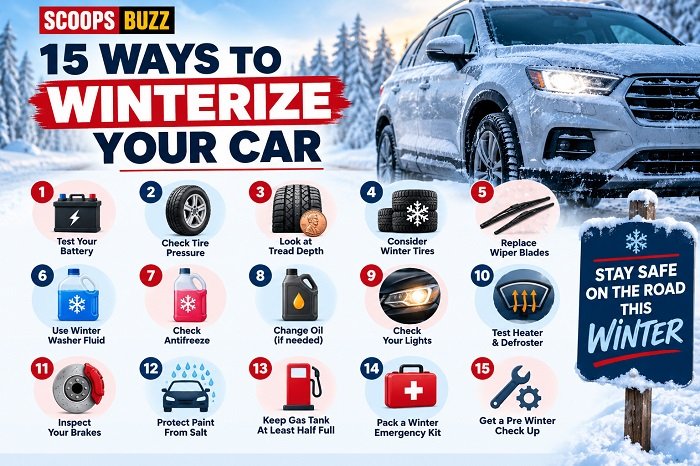
You can do most of these checks at home in an afternoon. If you only have time for a few, start with the battery, tires and wipers, which cause the most winter problems.
1. Test Your Battery
Your battery is the first thing to check when you winterize your car, because it is the most common cause of winter breakdowns. Cold temperatures slow the chemical reaction inside it, so it produces less power just when your engine needs more to start.
Most car batteries last about three to five years. If yours is older than that, or your engine is slow to turn over, get it tested. Many auto parts stores and garages will test it for free.
Also check the terminals for white or green corrosion and make sure the cables are tight.
2. Check Your Tire Pressure
Tire pressure drops by about 1 PSI for every 10 degrees Fahrenheit fall in temperature. A tire that was fine in September could be badly underinflated by December.
Check your tire pressure at least once a month in winter, when the tires are cold. Use the pressure listed on the sticker inside the driver’s door, not the number on the tire itself.
3. Look at Your Tread Depth
Good tread is vital on wet, slushy and icy roads, so check it every time you winterize your car. In the US, a simple test is to place a penny in the tread with Lincoln’s head upside down. If you can see the top of his head, your tires are worn and should be replaced.
In the UK, the legal minimum tread depth is 1.6mm across the central three quarters of the tire. Many experts recommend replacing tires at 3mm for winter driving.
4. Consider Winter Tires
If you live where snow and ice are common, winter tires can make a big difference. They use softer rubber that stays flexible in the cold and deeper tread patterns that grip snow.
All season tires work well in mild winters, but they lose grip below about 45 degrees Fahrenheit (7 degrees Celsius). In areas with heavy snow, some drivers also use all weather tires, which carry the mountain snowflake symbol and can be used all year.
5. Replace Your Wiper Blades
Fresh wipers are one of the cheapest ways to winterize your car. Wiper blades usually last six months to a year. If yours streak, skip or squeak, replace them before winter. Some drivers switch to winter wiper blades, which are designed to stop ice building up.
Never use your wipers to scrape ice off the windshield. It can damage the blades and the motor.
6. Use Winter Washer Fluid
Regular washer fluid can freeze in cold weather. Fill up with a winter washer fluid rated for low temperatures. Road salt and slush can cover your windshield quickly, so keep the reservoir full.
7. Check Your Antifreeze
You cannot properly winterize your car without checking the antifreeze. Antifreeze, also called coolant, keeps your engine from freezing in winter and overheating in summer. Check the level when the engine is cold, and have a mechanic test the mix. Most cars use a 50 to 50 mix of coolant and water.
8. Change Your Oil if Needed
Cold weather makes oil thicker, which can make your engine work harder at startup. Check your owner’s manual to see which oil grade is recommended for winter, and get an oil change if one is due.
9. Check Your Lights
Do not forget your lights when you winterize your car. Winter means shorter days and more driving in the dark, especially after the clocks change. Walk around your car and check the headlights, brake lights, turn signals and fog lights. Clean foggy headlight covers, which can cut how far you can see.
10. Test Your Heater and Defroster
A working heater keeps you comfortable, but a working defroster keeps you safe. If your windows take a long time to clear, have the system checked before the first freeze.
11. Inspect Your Brakes
Wet and icy roads make good brakes even more important. If you hear squealing or grinding, or your car pulls to one side when braking, have your brakes checked.
12. Protect Your Paint From Salt
Road salt helps keep roads safe, but it can cause rust. Wash your car regularly in winter, including the underside, to remove salt. A coat of wax before winter can add a layer of protection.
13. Keep Your Gas Tank at Least Half Full
A fuller tank helps prevent moisture from freezing in the fuel lines. It also means you will have fuel to keep the engine running for heat if you get stuck.
14. Pack a Winter Emergency Kit
Every car should carry a winter emergency kit (see the full list below). It could make a big difference if you break down in cold weather.
15. Get a Pre Winter Check Up
If you are not comfortable doing these checks yourself, you can still winterize your car the easy way: many garages offer a winter safety check for a low price, or sometimes for free. A mechanic can look at your battery, belts, hoses, brakes and fluids in one visit.
What to Keep in Your Winter Car Emergency Kit
| Item | Why you need it |
| Ice scraper and snow brush | To clear windows and lights |
| Warm blanket and gloves | To stay warm if stranded |
| Flashlight with spare batteries | To see and signal at night |
| Phone charger or power bank | To call for help |
| Jumper cables or jump starter | To restart a dead battery |
| Small shovel | To dig out of snow |
| Bag of sand or cat litter | For grip under stuck tires |
| Water and snacks | In case of long delays |
| First aid kit | For minor injuries |
| Reflective triangles or flares | To warn other drivers |
| De-icer spray | To unfreeze locks and windows |
How Cold Weather Affects Electric Cars
5 Smart Ways to Protect Your EV in Winter
Cold weather can reduce electric-car range. Stay prepared with these simple tips.
ALL THE BUZZ · ALL THE SCOOPS
Electric vehicle owners also need to winterize your car, but they need to plan a little differently.
Cold weather reduces EV range, because the battery works less efficiently in low temperatures and the car uses energy to heat the cabin. Depending on the car and the temperature, range can drop noticeably on very cold days.
To get the most range from an electric car in winter:
- Precondition the car while it is plugged in. Most EVs let you warm the battery and cabin using an app before you leave. This uses power from the grid, not your battery.
- Use seat and steering wheel heaters. They use less energy than heating the whole cabin.
- Park in a garage if you can. A warmer battery charges faster and holds more range.
- Keep charge above 20% in very cold weather, so you have a buffer.
- Plan longer trips. Allow extra time for charging, since fast charging can be slower when the battery is cold.
Winter Driving Tips
7 Rules for Safer Winter Driving
Stay alert, drive smoothly and prepare for changing road conditions.
Read the AAA winter driving guide for more safety advice.
ALL THE BUZZ · ALL THE SCOOPS
Even a well prepared car needs a careful driver. The National Highway Traffic Safety Administration publishes winter driving advice every year, and here are some of the most important tips:
- Slow down. It takes longer to stop on wet, snowy or icy roads.
- Leave more space. Increase your following distance to at least six seconds on slippery roads.
- Brake gently. Avoid sudden braking, accelerating or turning.
- Clear all snow and ice. Clear your whole car, including the roof, lights and mirrors, before driving.
- Watch for black ice. Bridges, overpasses and shaded areas freeze first.
- Do not use cruise control on slippery roads.
- Check the weather before you leave, and delay trips in severe conditions.
AAA also offers a helpful guide to driving safely in winter weather.
What to Do if Your Car Gets Stuck in Snow
- Stay with your car. It provides shelter and makes it easier for rescuers to find you.
- Call for help and tell them where you are.
- Clear the exhaust pipe. A blocked exhaust can cause dangerous carbon monoxide to build up inside the car.
- Run the engine only for short periods to stay warm, about 10 minutes every hour, with a window slightly open.
- Make yourself visible. Turn on your hazard lights or tie something bright to the antenna.
Winter Car Care in the UK
UK Winter Driving: 4 Essential Safety Tips
Clear Every Window: Remove frost and snow for a full, clear view before driving.
Never Leave Your Engine Running Unattended: Avoid leaving your vehicle running unattended on a public road.
Check Tire Tread: UK legal minimum is 1.6mm across the central three-quarters of the tread.
Pack a Winter Kit: Carry warm clothing, water, a torch and essential emergency supplies.
UK winters are often wetter than they are snowy, but ice, fog and flooding still cause plenty of problems. UK drivers should:
- Clear windows fully. Under the Highway Code, you must be able to see out of every window before driving. Driving with a view blocked by frost or snow can lead to a fine and penalty points.
- Never leave the engine running unattended to defrost the car on a public road. It is illegal and makes your car easy to steal.
- Check tread depth. Tires below 1.6mm are illegal and can bring a fine of up to £2,500 and three penalty points per tire.
- Carry a winter kit, especially on longer journeys or in rural areas.
How Much Does It Cost to Winterize Your Car?
The good news is that it costs very little to winterize your car. Most winter checks are cheap or free.
| Task | Typical cost |
| Tire pressure and tread check | Free |
| Battery test | Often free at parts stores |
| New wiper blades | Around $20 to $50 a pair |
| Winter washer fluid | Under $10 |
| New battery | Around $100 to $300 |
| Set of winter tires | Several hundred dollars and up |
Spending a little now can prevent much bigger repair bills and towing fees later.
Winterize Your Car Checklist
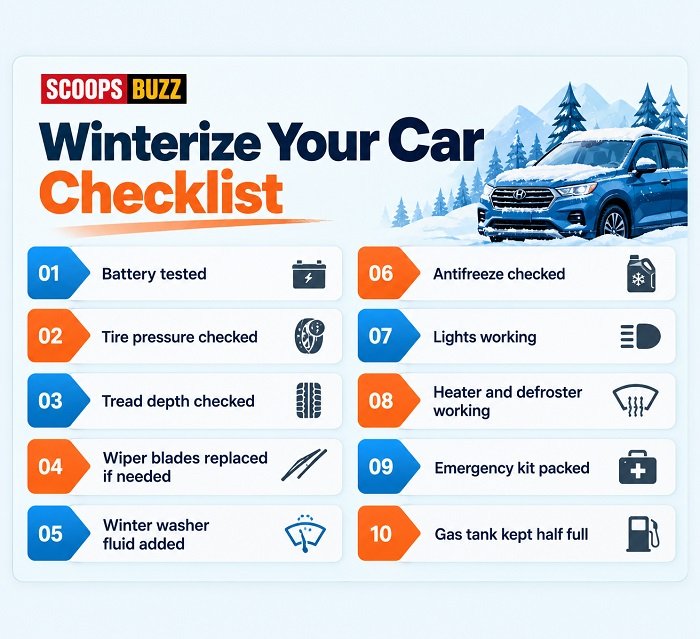
Use this simple list to winterize your car before the first freeze:
- Battery tested
- Tire pressure checked
- Tread depth checked
- Wiper blades replaced if needed
- Winter washer fluid added
- Antifreeze checked
- Lights working
- Heater and defroster working
- Emergency kit packed
- Gas tank kept half full
More From ScoopsBuzz
- Thanksgiving travel 2026: best days to fly, when to book and how to save
- How to lower heating bills this winter: 15 tips that work
Frequently Asked Questions
How do I winterize my car?
Test the battery, check tire pressure and tread, replace worn wipers, use winter washer fluid, check antifreeze and lights, and pack an emergency kit.
When should I winterize my car?
Ideally in October or early November, before the first freeze.
Why does my car battery die in cold weather?
Cold slows the chemical reaction inside the battery, so it produces less power while the engine needs more to start.
How much does tire pressure drop in cold weather?
About 1 PSI for every 10 degrees Fahrenheit drop in temperature.
Do I need winter tires?
If you live where snow and ice are common, winter tires offer much better grip. In milder areas, good all season or all weather tires may be enough.
Do electric cars lose range in winter?
Yes. Cold weather reduces range, but preconditioning the car while plugged in can help.
What should be in a winter car emergency kit?
An ice scraper, blanket, flashlight, phone charger, jumper cables, small shovel, water, snacks and a first aid kit.
Sources: National Highway Traffic Safety Administration, AAA, UK Highway Code, RAC, Consumer Reports