
Table of Contents
There is no cure for the common cold, but rest, fluids and simple remedies can ease symptoms. Most colds get better in about 7 to 10 days, though a cough can last longer. Antibiotics do not work on colds, because colds are caused by viruses. Honey can soothe a cough in adults and children over one year old, but never give honey to babies under one. See a doctor if symptoms last more than three weeks, get much worse or you have trouble breathing.
A runny nose, a sore throat, a pounding head and a cough that will not stop. The common cold is one of the most frequent illnesses in the world, and the winter months are peak season.
Most adults catch two or three colds a year, according to US health officials, and young children catch even more. While a cold is rarely serious, it can make you feel miserable for days.
There is no instant cure, but if you are wondering how to get rid of a cold, there is plenty you can do to feel better faster. Here is how to get rid of a cold, with 15 remedies that actually help, how long colds last and when to see a doctor.
What Causes a Cold?
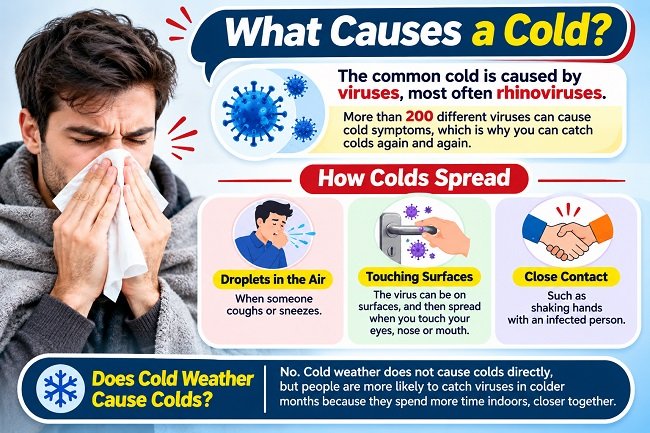
The common cold is caused by viruses, most often rhinoviruses. More than 200 different viruses can cause cold symptoms, which is why you can catch colds again and again.
Colds spread through:
- Droplets in the air when someone coughs or sneezes
- Touching a surface with the virus on it, then touching your eyes, nose or mouth
- Close contact, such as shaking hands
Cold weather does not cause colds directly, but people spend more time indoors and close together in winter, which helps viruses spread.
Common Cold Symptoms
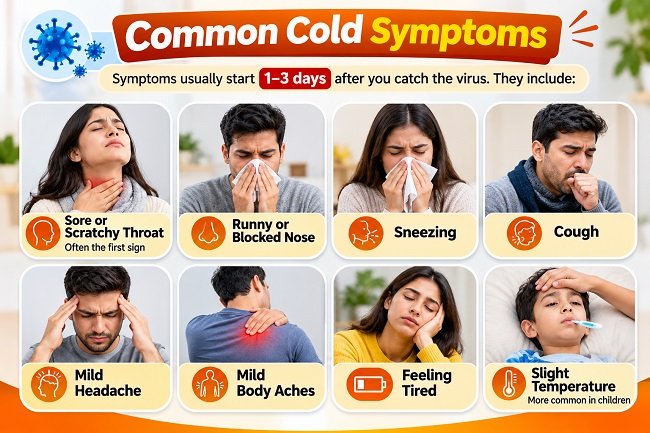
Symptoms usually start one to three days after you catch the virus. They include:
- Sore or scratchy throat, often the first sign
- Runny or blocked nose
- Sneezing
- Cough
- Mild headache
- Mild body aches
- Feeling tired
- A slight temperature in some cases, more common in children
How Long Does a Cold Last?
🧡 How Long Does a Cold Last?
Most colds improve within 7–10 days. Symptoms are often worst during the first 2–3 days.
| Timeline | What to Expect |
|---|---|
| ➜ Days 1–2 | Sore throat, tiredness and sneezing |
| ➜ Days 2–4 | Runny or blocked nose; symptoms often peak |
| ➜ Days 4–7 | Symptoms ease, but a cough may develop |
| ➜ Days 7–10 | Most people feel much better |
| ➜ Up to 3 Weeks | A lingering cough may still be present |
Remember: A cough can last longer than other cold symptoms, sometimes for two weeks or more.
Most colds get better within 7 to 10 days. Symptoms are usually worst in the first two or three days. A cough can hang on for two weeks or more.
| Day | What to expect |
| Days 1 to 2 | Sore throat, tiredness, sneezing |
| Days 2 to 4 | Runny or blocked nose, peak symptoms |
| Days 4 to 7 | Symptoms ease, cough may develop |
| Days 7 to 10 | Most people feel much better |
| Up to 3 weeks | A lingering cough is still possible |
How to Get Rid of a Cold: 15 Remedies That Help
How to Get Rid of a Cold: 15 Remedies That Help
Simple ways to ease cold symptoms and support your recovery.
| # | Remedy | How It Helps |
|---|---|---|
| 01 | 🛌 Rest | Gives your body energy to fight the virus and recover. |
| 02 | 💧 Drink Plenty of Fluids | Keeps you hydrated and helps loosen mucus. |
| 03 | ☕ Try Warm Drinks | Soothes a sore throat and may ease a blocked nose. |
| 04 | 🍯 Use Honey for a Cough | May soothe a cough and sore throat. Never give honey to babies under 1 year. |
| 05 | 🧂 Gargle With Salt Water | Can provide temporary relief from a sore throat. |
| 06 | 🌿 Saline Nose Spray or Drops | Helps clear a blocked nose and is suitable for most people. |
| 07 | ♨️ Breathe in Steam | A warm shower may help loosen mucus. Avoid bowls of hot water because of burn risks. |
| 08 | 💨 Use a Humidifier | Adds moisture to indoor air. Clean the device regularly. |
| 09 | 🛏️ Raise Your Head While Sleeping | An extra pillow may help mucus drain and make breathing easier. |
| 10 | 💊 Over-the-Counter Pain Relief | Acetaminophen (paracetamol) or ibuprofen may ease aches and fever. Follow package directions. |
| 11 | 👃 Consider Decongestants | Can temporarily relieve congestion. Nasal sprays should not usually be used for more than a few days. |
| 12 | 🥣 Eat Well | Choose nourishing foods such as soups, fruit and vegetables. |
| 13 | 🟢 Think About Zinc | Lozenges may slightly shorten a cold if taken early, but evidence is mixed. Ask a pharmacist first. |
| 14 | 🍊 Do Not Count on Vitamin C | Regular vitamin C does not prevent most colds. It may slightly shorten them for some people. |
| 15 | 🏠 Stay Home and Protect Others | Wash your hands, cover coughs and sneezes, and stay home while unwell. |
Knowing how to get rid of a cold mostly means easing symptoms while your body does the work. These remedies will not kill the virus, but they can ease symptoms and help your body recover faster.
1. Rest
Rest is the first answer to how to get rid of a cold. Your body uses energy to fight the virus. Getting extra sleep and taking it easy is one of the simplest ways to get rid of a cold sooner. If you can, stay home from work or school for the first few days. It also stops you spreading it to others.
2. Drink Plenty of Fluids
Staying hydrated is a simple way to help get rid of a cold. Water, warm drinks, clear soups and herbal teas help keep you hydrated and loosen mucus. Avoid too much alcohol and caffeine, which can dehydrate you.
3. Try Warm Drinks
Warm liquids such as tea, warm water with lemon or broth can soothe a sore throat and help a blocked nose. There is a reason chicken soup has been a cold remedy for generations.
4. Use Honey for a Cough
A spoonful of honey, on its own or in a warm drink, can soothe a cough and sore throat. Studies suggest it may work as well as some cough medicines for children. Never give honey to babies under one year old, because of the risk of infant botulism.
5. Gargle With Salt Water
Mix about half a teaspoon of salt in a glass of warm water and gargle. This can ease a sore throat for a short time. It is suitable for adults and older children who can gargle safely.
6. Use Saline Nose Spray or Drops
Salt water nasal sprays or drops can help clear a blocked nose. They are safe for most people, including children.
7. Breathe in Steam
Breathing in steam from a hot shower can help loosen mucus. Be careful with bowls of hot water, especially around children, as they can cause burns.
8. Use a Humidifier
Dry indoor air in winter can make a sore throat and blocked nose worse. A humidifier adds moisture to the air. Clean it regularly to stop mold growing.
9. Sleep With Your Head Raised
An extra pillow can help mucus drain and make breathing easier at night.
10. Take Over the Counter Pain Relief
Pain relievers such as acetaminophen (called paracetamol in the UK) or ibuprofen can ease headaches, aches and a raised temperature. Always follow the directions on the package, and ask a pharmacist if you are unsure what is right for you or your child.
11. Consider Decongestants Carefully
Decongestant sprays and tablets can relieve a blocked nose for a short time. Nasal decongestant sprays should not usually be used for more than a few days, as they can make congestion worse. Many decongestants are not suitable for young children or people with certain health conditions, so check with a pharmacist.
12. Eat Well
You may not feel hungry, but light, nourishing food helps your body recover. Soups, fruit, vegetables and simple meals are good choices.
13. Think About Zinc
Some research suggests zinc lozenges taken within a day of symptoms starting may slightly shorten a cold, but the evidence is mixed and zinc can cause side effects such as a bad taste or nausea. Talk to a pharmacist before using it.
14. Do Not Count on Vitamin C
Taking vitamin C regularly does not seem to stop most people catching colds. Some studies suggest it may shorten colds slightly in people who take it every day before getting sick. Eating fruit and vegetables is a sensible way to get it.
15. Stay Home and Protect Others
Wash your hands often, cough and sneeze into a tissue or your elbow, and throw tissues away right away. Staying home while you feel unwell helps stop the cold spreading through your workplace or school.
How to Get Rid of a Cold Overnight: Is It Possible?
Many people search for how to get rid of a cold overnight. Sadly, there is no way to make a cold disappear in one night, because your immune system needs time to clear the virus.
What you can do is have a much better night and wake up feeling less miserable:
- Take a warm shower before bed to loosen mucus.
- Drink a warm, caffeine free drink with honey.
- Raise your head with an extra pillow.
- Use a saline spray or a humidifier.
- Take pain relief if you need it, following the label.
- Go to bed early and sleep as long as you can.
How to Get Rid of a Sore Throat From a Cold
A sore throat is often the first and most uncomfortable symptom. To ease it:
- Sip warm drinks or suck on ice chips or ice pops.
- Gargle with salt water a few times a day.
- Suck throat lozenges or hard candies, but not for young children because of choking risk.
- Rest your voice.
If a sore throat is very severe, lasts more than a week, or you have trouble swallowing or breathing, see a doctor.
What Does Not Work for a Cold
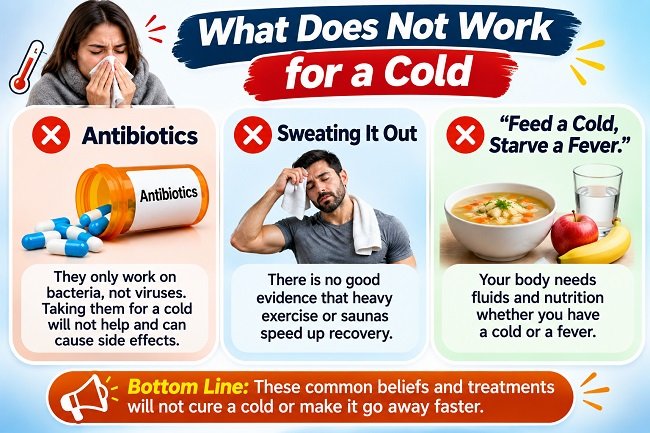
- Antibiotics. They only work on bacteria, not viruses. Taking them for a cold will not help and can cause side effects.
- Sweating it out. There is no good evidence that heavy exercise or saunas speed up recovery.
- “Feed a cold, starve a fever.” Your body needs fluids and nutrition whether you have a cold or a fever.
Cold vs Flu vs COVID: How to Tell the Difference
| Symptom | Cold | Flu | COVID |
| How it starts | Gradually | Suddenly | Can be gradual or sudden |
| Fever | Rare in adults | Common, often high | Common |
| Aches | Mild | Often severe | Common |
| Tiredness | Mild | Often extreme | Common |
| Sneezing | Common | Sometimes | Sometimes |
| Sore throat | Common | Sometimes | Common |
| Loss of taste or smell | Rare | Rare | Possible |
Because symptoms overlap, a home test can help if you are not sure whether you have COVID. If you think you have the flu, especially if you are older or have health conditions, contact a doctor quickly, as antiviral medicines work best when started early.
How to Get Rid of a Cold in Children
🧡 How to Get Rid of a Cold in Children
Help children recover with these simple precautions:
- ➜ Ensure plenty of rest and fluids.
- ➜ Use saline drops and a humidifier for a blocked nose.
- ➜ Give children’s pain relief only as directed for their age and weight.
- ➜ Avoid cough and cold medicines in young children unless a doctor or pharmacist says they are safe. Many are not recommended under age 6.
- ➜ Never give aspirin to children under 16.
Knowing how to get rid of a cold in children takes extra care. Children catch more colds than adults, often six to eight a year. To help them:
- Make sure they get plenty of rest and fluids.
- Use saline drops and a humidifier for a blocked nose.
- Use children’s pain relief only as directed for their age and weight.
- Do not give cough and cold medicines to young children unless a doctor or pharmacist says it is safe. Many are not recommended for children under six.
- Never give aspirin to children under 16.
When to See a Doctor
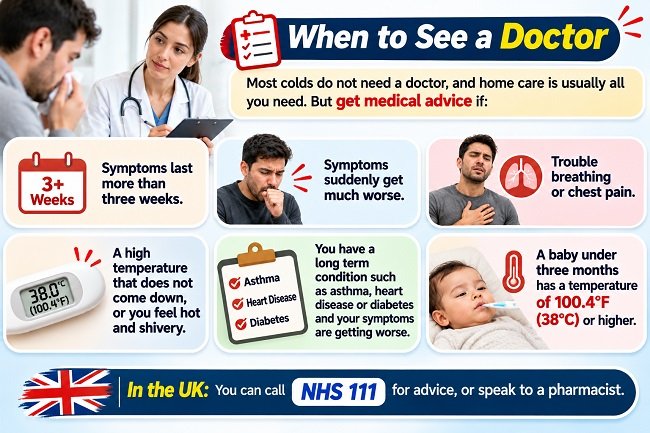
Most colds do not need a doctor, and home care is usually all you need to get rid of a cold. But get medical advice if:
- Symptoms last more than three weeks
- Symptoms suddenly get much worse
- You have trouble breathing or chest pain
- You have a high temperature that does not come down, or you feel hot and shivery
- You have a long term condition such as asthma, heart disease or diabetes and your symptoms are getting worse
- A baby under three months has a temperature of 100.4°F (38°C) or higher
In the UK, you can call NHS 111 for advice, or speak to a pharmacist. The NHS common cold page has more guidance. In the US, call your doctor or a nurse line. Call 911 in the US or 999 in the UK in an emergency.
How to Avoid Catching a Cold
The best way to get rid of a cold is not to catch one at all.
- Wash your hands with soap and water for at least 20 seconds, especially before eating.
- Avoid touching your face with unwashed hands.
- Keep your distance from people who are sick when you can.
- Clean shared surfaces like phones, keyboards and door handles.
- Get enough sleep. People who sleep well may be less likely to catch colds.
- Get your flu shot. It will not stop colds, but it protects you from the flu, which can be much more serious.
You can read more about the science of colds on the common cold Wikipedia page.
More From ScoopsBuzz
Frequently Asked Questions
How can I get rid of a cold fast?
There is no instant cure, but rest, fluids, honey for a cough, saline spray and pain relief can ease symptoms while your body fights the virus.
How long does a cold last?
Most colds last about 7 to 10 days, though a cough can continue for two weeks or more.
Do antibiotics help a cold?
No. Colds are caused by viruses, and antibiotics only work on bacteria.
Is it a cold or the flu?
Colds usually come on slowly with a runny nose and sore throat. Flu usually starts suddenly with a high temperature, aches and extreme tiredness.
Does vitamin C cure a cold?
No. It may slightly shorten colds for people who take it regularly, but it does not cure them.
When should I see a doctor for a cold?
If symptoms last more than three weeks, suddenly get worse, or you have trouble breathing.
Disclaimer: This article is for general information only and is not medical advice. Speak to a doctor or pharmacist about your own symptoms.
Sources: Centers for Disease Control and Prevention, NHS, Mayo Clinic, Cochrane reviews