
Table of Contents
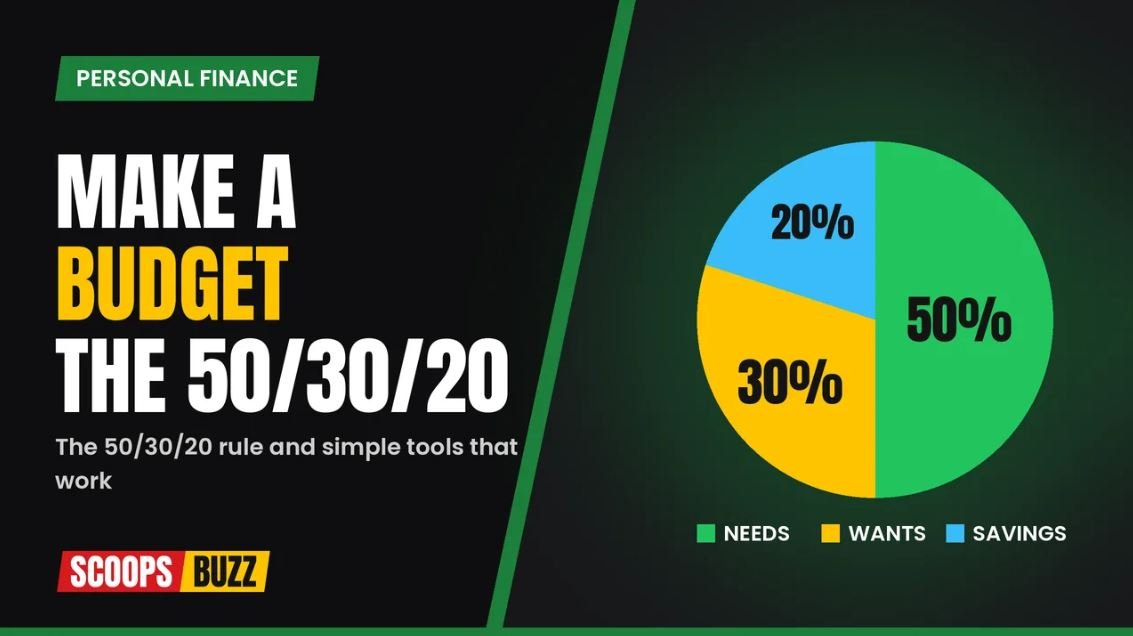
A budget is a plan for your money that shows what comes in, what goes out and what is left over. The 50/30/20 rule splits take home pay into 50% for needs, 30% for wants and 20% for savings and debt. Track every expense for a month before setting your budget, so it is based on real numbers. Build an emergency fund of three to six months of essential costs over time. Review your budget every month and adjust it as your life changes.
If money seems to disappear before the end of every month, you are not alone. Rising prices for food, energy and housing have squeezed household budgets across America, Britain and Europe over the past few years.
Learning how to make a budget is one of the simplest ways to take back control. It is not about cutting out every treat. It is about knowing where your money goes, so you can spend on what matters most and save for the future.
Here is how to make a budget in seven simple steps, along with the most popular budgeting methods, free tools and tips to help you stick with it.
What Is a Budget?
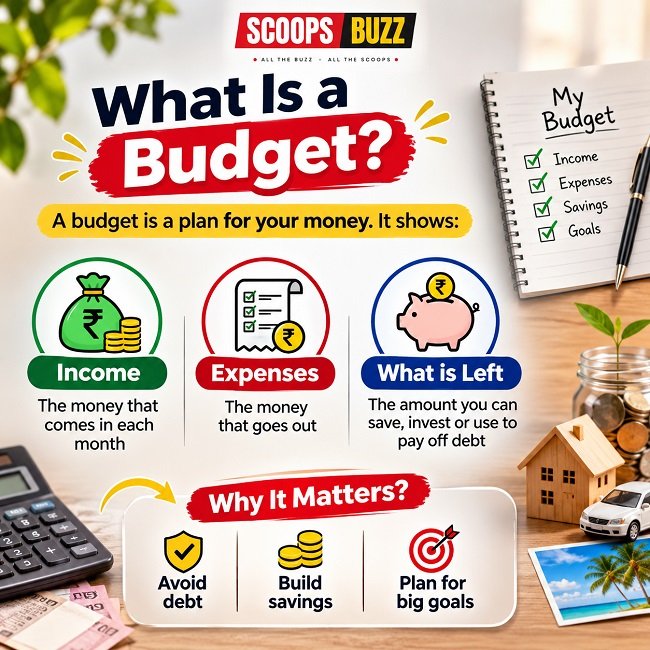
A budget is a plan for your money. It shows:
- Income: The money that comes in each month
- Expenses: The money that goes out
- What is left: The amount you can save, invest or use to pay off debt
A good budget helps you avoid debt, build savings and plan for big goals like a home, a car, a holiday or retirement.
How to Make a Budget in 7 Simple Steps
How to Make a Budget in 7 Simple Steps
| Step | What You Need to Do | Key Points |
|---|---|---|
| 1. Calculate Monthly Income | Work out your total take-home income after taxes and deductions. | Include salary, freelance income, benefits, child support, pension and Social Security. Use your lowest typical monthly income if earnings vary. |
| 2. Track Your Spending | Monitor where your money goes before setting spending limits. | Review bank and credit card statements from the past 1–3 months. Track small purchases, coffee, takeout, delivery fees and subscriptions. |
| 3. Categorize Expenses | Divide your monthly expenses into different groups. | Fixed needs, variable needs, debt payments, wants and savings. |
| 4. Choose a Budgeting Method | Select a budgeting approach that fits your lifestyle. | Choose a simple method you can follow consistently, such as the 50/30/20 rule or zero-based budgeting. |
| 5. Set Spending Limits | Decide how much money to allocate to each category. | Keep total spending and savings within your income. Reduce non-essential expenses if your budget exceeds your earnings. |
| 6. Automate Savings and Bills | Set up automatic savings transfers and regular bill payments. | Schedule transfers on payday, pay bills on time and build your savings consistently. |
| 7. Review Your Budget Monthly | Check your budget at the end of every month and make adjustments. | Review overspending, increased bills, changing income and financial goals. Update your budget when needed. |
You do not need special skills or software to learn how to make a budget. Just follow these steps.
Step 1: Work Out Your Monthly Income
Start with your take home pay, the money that actually lands in your bank account after tax and other deductions.
Include all regular income, such as:
- Wages or salary
- Side jobs or freelance work
- Benefits or child support
- Pension or Social Security payments
If your income changes from month to month, use your lowest typical month as a starting point. That way you will not overspend in a slow month.
Step 2: Track Your Spending for a Month
Before you set limits, find out where your money really goes. Look at your bank and credit card statements for the past one to three months, or track every purchase for a month.
Many people are surprised by how much they spend on small things like coffee, takeout, delivery fees and subscriptions.
Step 3: Sort Your Expenses Into Groups
Divide your spending into categories:
| Category | Examples |
| Fixed needs | Rent or mortgage, insurance, car payment, phone plan |
| Variable needs | Groceries, utilities, gas or petrol, transport |
| Debt payments | Credit cards, student loans, personal loans |
| Wants | Eating out, entertainment, shopping, streaming |
| Savings | Emergency fund, retirement, holiday fund |
Step 4: Choose a Budgeting Method
There is no single right way when it comes to how to make a budget. Pick a method that suits your personality and lifestyle. The most popular ones are explained below.
Step 5: Set Your Spending Limits
Using your chosen method, decide how much to spend in each category. Make sure your total spending and saving does not go over your income.
If it does, look for places to cut back, starting with wants rather than needs.
Step 6: Automate Your Savings and Bills
Set up automatic transfers to your savings account on payday, and automatic payments for regular bills. This way, saving happens first and bills are never late. Paying bills on time also helps your credit score.
Step 7: Review Your Budget Every Month
A budget is not something you set once and forget. Check it each month. Did you overspend somewhere? Did a bill go up? Adjust your plan as your income, costs and goals change.
Popular Budgeting Methods
4 Smart Ways to Budget Your Money
Choose a budgeting method that matches your lifestyle and financial goals.
50/30/20 Rule
Divide your take-home income into three simple spending categories.
- 50% for housing, food and bills
- 30% for shopping and entertainment
- 20% for savings and extra debt payments
$2,000 Needs | $1,200 Wants | $800 Savings & Debt
Zero-Based Budgeting
Give every dollar a specific purpose before the month begins.
- Plan every expense in advance
- Include savings and debt payments
- Track exactly where your money goes
People who want maximum control over their money.
Envelope Budgeting
Separate your money into spending categories using cash or digital pots.
- Set a spending limit for each category
- Stop spending when an envelope is empty
- Use banking apps for digital envelopes
People who struggle with overspending.
Pay Yourself First
Save a fixed amount as soon as your paycheck arrives.
- Automate savings on payday
- Build your emergency fund
- Spend the remaining money freely
People who prefer simple budgeting without tracking every purchase.
The 50/30/20 Rule
This is one of the easiest ways to make a budget. It was made popular by US Senator Elizabeth Warren and her daughter Amelia Warren Tyagi in their book All Your Worth. You split your take home pay into three parts:
| Share | What it covers |
| 50% | Needs: housing, food, utilities, transport, insurance, minimum debt payments |
| 30% | Wants: eating out, hobbies, entertainment, travel, shopping |
| 20% | Savings and debt: emergency fund, retirement, extra debt payments |
Example: If you take home $4,000 a month, you would spend about $2,000 on needs, $1,200 on wants and put $800 toward savings and extra debt payments.
In expensive cities, housing alone can take more than half of your income. If that is the case, you can adjust the split, for example 60/20/20, while you work toward your goals.
Zero Based Budgeting
With a zero based budget, you give every dollar or pound a job until your income minus your planned spending and saving equals zero. It does not mean you spend everything. Savings and debt payments are part of the plan.
This method gives you the most control but takes more time to set up.
Envelope Budgeting
The envelope method is an old fashioned system that still works. You put cash for each spending category, such as groceries or entertainment, into separate envelopes. When an envelope is empty, you stop spending in that category until next month.
Today, many banking apps offer digital “pots” or “envelopes” that work the same way.
Pay Yourself First
With this method, you move a set amount into savings as soon as you are paid, and then spend the rest freely. It is simple and works well for people who do not want to track every purchase.
Free Budgeting Tools
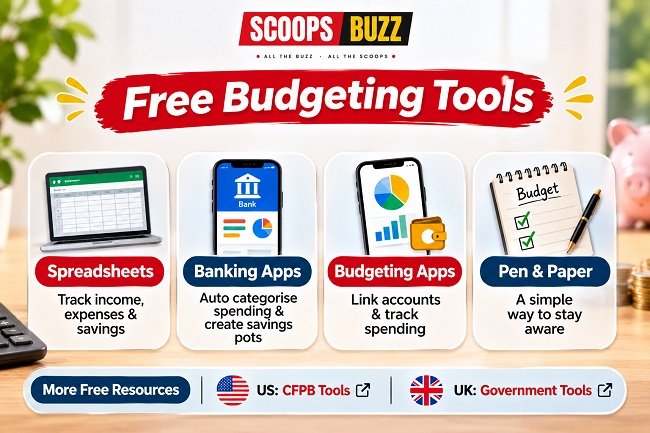
You do not need to spend money to learn how to make a budget. These free tools can help.
- Spreadsheets: A simple sheet with columns for income, expenses and savings works well. Many free templates are available online.
- Banking apps: Most banks now sort your spending into categories automatically and let you set up savings pots.
- Budgeting apps: Many apps link to your accounts and track spending for you. Some are free and some charge a subscription.
- Pen and paper: Writing things down by hand helps some people stay aware of their spending.
In the US, the Consumer Financial Protection Bureau offers free worksheets and tools for managing money. In the UK, the government backed MoneyHelper service has a free budget planner.
How to Cut Your Expenses
8 Easy Ways to Cut Your Expenses
Small changes in your daily habits can help you save more money every month.
Cancel Unused Subscriptions
Cancel streaming services, apps and gym memberships you rarely use.
Compare Insurance Plans
Compare car, home and phone plans before renewing to find better deals.
Plan Your Meals
Create a weekly meal plan and shopping list to reduce grocery bills and food waste.
Cook More at Home
Reduce takeaway orders and delivery fees by preparing more meals at home.
Save Energy
Turn off unused lights and appliances to help lower your energy bills.
Choose Store Brands
Try supermarket own-brand products to save money on everyday essentials.
Follow the 24-Hour Rule
Wait 24 hours before making non-essential purchases to avoid impulse buying.
Avoid Sales Traps
Buy discounted products only when you genuinely need them.
If your budget does not balance, these are often the easiest places to save:
- Cancel unused subscriptions. Streaming services, apps and gym memberships add up fast.
- Shop around for insurance. Compare car, home and phone plans every year rather than letting them renew automatically.
- Plan meals. A weekly meal plan and shopping list can cut grocery bills and food waste.
- Cook more at home. Takeout and delivery fees are one of the biggest budget leaks.
- Cut energy use. Small changes, like lowering the thermostat a degree, can reduce heating bills.
- Buy store brands. Supermarket own brands are often much cheaper and just as good.
- Use a 24 hour rule. Wait a day before buying anything that is not essential.
- Avoid sales traps. Black Friday and January sales are only a bargain if you were going to buy the item anyway.
Build an Emergency Fund
An emergency fund is money set aside for unexpected costs, such as a car repair, a medical bill or losing your job. Without one, these surprises often end up on a credit card.
Experts usually suggest saving three to six months of essential expenses. That can feel like a lot, so start small. Even $500 or £500 can cover many common emergencies.
Keep your emergency fund in a separate, easy access savings account, ideally one that pays a good rate of interest.
How to Budget to Pay Off Debt
2 Smart Ways to Pay Off Debt Faster
Choose a repayment strategy that fits your financial situation and helps you become debt-free.
1. Debt Avalanche Method
Focus on paying off the debt with the highest interest rate first.
- Pay minimum amounts on all debts.
- Put extra money toward the highest-interest debt.
- Move to the next highest-interest debt after repayment.
People who want to reduce total interest costs.
2. Debt Snowball Method
Start by paying off your smallest debt balance first.
- Pay minimum amounts on all debts.
- Put extra money toward the smallest balance.
- Move to the next smallest debt after repayment.
People who need motivation and quick progress.
Quick Comparison
| Feature | Avalanche | Snowball |
|---|---|---|
| Priority | Highest interest | Smallest balance |
| Main Benefit | Less interest paid | Quick motivation |
| Focus | Cost savings | Small victories |
Consider contacting a nonprofit credit counseling agency in the US or a free debt advice service in the UK.
If you have debt, include extra payments in your budget. Two popular methods are:
- Avalanche method: Pay the minimum on all debts, then put extra money toward the debt with the highest interest rate. This saves the most money.
- Snowball method: Pay the minimum on all debts, then put extra money toward the smallest balance. Paying off small debts quickly can keep you motivated.
If you are struggling with debt, free help is available. In the US, look for a nonprofit credit counseling agency. In the UK, charities such as StepChange and Citizens Advice offer free debt advice.
How to Make a Budget on an Irregular Income
If you are self employed, work in the gig economy or earn commission, learning how to make a budget can feel harder. These tips help:
- Budget for your lowest month, not your average month.
- Pay yourself a set salary from a separate business or holding account, so your personal income stays steady.
- Set aside money for taxes as soon as you are paid, if tax is not taken out automatically.
- Build a bigger buffer. Aim for a larger emergency fund to cover slow months.
- Put extra money to work in good months by saving or paying off debt.
How to Make a Budget as a Couple or Family
Build a Budget Together, Grow Together
A shared money plan can reduce financial stress and help couples and families achieve their goals.
Be Honest About Money
Discuss income, debts and spending habits openly. Transparency builds trust.
Set Shared Goals
Plan together for a house deposit, family holiday or other important milestones.
Split Expenses Fairly
Decide whether to combine finances, share bills or keep separate accounts.
Keep Personal Spending Money
Give each person some money to spend freely without having to explain every purchase.
Have Monthly Money Meetings
Review expenses, savings and progress together once a month.
Money is one of the most common causes of arguments in relationships. Making a budget together can help.
- Be honest about income, debts and spending habits.
- Agree on shared goals, such as a house deposit or a family holiday.
- Decide how to split costs. Some couples pool all their money, while others share bills and keep some money separate.
- Give each person some personal spending money that they do not have to explain.
- Hold a short money meeting once a month to check progress.
Involving children in simple budgeting, such as saving pocket money for a toy, is also a great way to teach them about money early.
Common Budgeting Mistakes
- Being too strict. A budget with no room for fun is hard to stick to.
- Forgetting irregular costs. Car repairs, birthdays, holidays and annual bills catch people out. Save a little each month for them.
- Not tracking small purchases. Small daily spending adds up.
- Giving up after one bad month. Everyone overspends sometimes. Just adjust and keep going.
- Not involving your partner. If you share finances, make the budget together.
How to Make a Budget Stick
5 Simple Habits to Stick to Your Budget
Building a budget is easy. Following it consistently is what makes the real difference!
Keep It Simple
Create an easy budget with clear spending categories. Avoid complicated plans.
Set Clear Financial Goals
Save for a holiday, build an emergency fund or pay off your credit card.
Review Spending Weekly
Spend a few minutes each week checking your expenses and progress.
Reward Your Progress
Celebrate small financial wins when you reach an important savings goal.
Automate Your Savings
Schedule automatic transfers so you save money regularly without extra effort.
Small money habits today can create a better financial future.
Knowing how to make a budget is one thing. Sticking to it is another.
- Keep it simple.
- Set clear goals, such as saving for a holiday or paying off a credit card.
- Check your spending every week for a few minutes.
- Reward yourself when you hit a goal.
- Use automatic transfers so saving happens without thinking.
Budgeting in the US vs the UK
The basics of how to make a budget are the same everywhere, but some costs differ. Americans often need to budget for health insurance, deductibles and larger car costs. People in the UK need to plan for council tax, TV licence fees and energy bills that change with the price cap. In both countries, rent and mortgage payments are usually the biggest expense.
More From ScoopsBuzz
- How to improve your credit score: 15 simple steps that really work
- Black Friday 2026: dates, early deals and how to avoid overspending
Frequently Asked Questions
How do I make a budget for the first time?
Work out your take home pay, track your spending for a month, sort expenses into categories, choose a budgeting method and set spending limits.
What is the 50/30/20 rule?
It splits your take home pay into 50% for needs, 30% for wants and 20% for savings and debt repayment.
How much should I save each month?
The 50/30/20 rule suggests 20% of take home pay, but any amount is a good start.
What is the best budgeting app?
The best one is the one you will actually use. Many banks now offer free budgeting tools inside their apps.
How much should I have in an emergency fund?
Aim for three to six months of essential expenses, but start with a smaller goal like $500 or £500.
How often should I review my budget?
Check it at least once a month, and update it whenever your income or costs change.
Disclaimer: This article is for general information only and is not financial advice.
Sources: Consumer Financial Protection Bureau, MoneyHelper, Elizabeth Warren and Amelia Warren Tyagi, All Your Worth