

Table of Contents
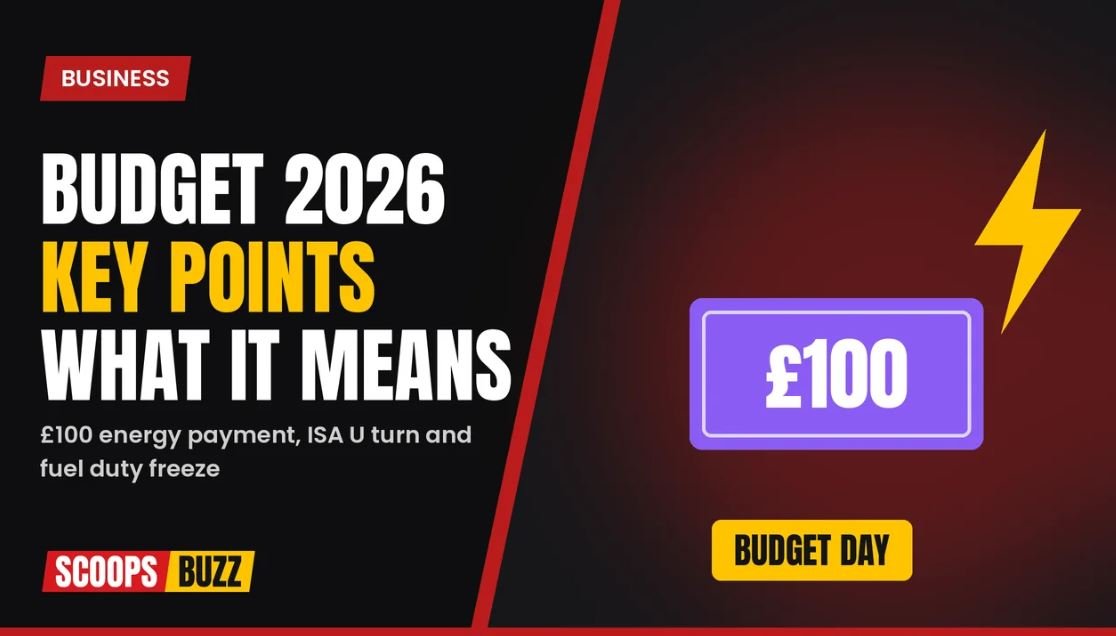
About 20 million households in council tax bands A to D will get a one off £100 Household Energy Payment. Gas standing charges will be scrapped from 2027, and zero VAT on electricity is extended to July 2027. The planned cut to the Cash ISA allowance has been scrapped, so the £20,000 limit stays for everyone. Fuel duty stays frozen, with the 5p cut kept until July 2027. The National Living Wage will rise 3.9% to £13.21 an hour from April 2027.
Chancellor John Healey has delivered his first Budget, promising households “breathing space” from high energy bills and rising prices.
The biggest headlines were a £100 payment to help with energy costs, the end of gas standing charges, a U turn on Cash ISAs and a higher tax on banks to help pay for it all.
The Office for Budget Responsibility also published new forecasts showing slower growth next year and a smaller financial buffer, after the war involving Iran pushed up energy prices and borrowing costs.
Here are the Budget 2026 key points and what they mean for your money.
Budget 2026 Key Points at a Glance
| Area | What was announced |
| Energy | £100 payment for about 20 million homes, gas standing charges scrapped from 2027 |
| Electricity VAT | Zero VAT extended to July 2027 |
| ISAs | Cash ISA cut scrapped, £20,000 limit stays |
| Fuel | Duty frozen, 5p cut kept until July 2027 |
| Wages | National Living Wage up to £13.21 from April 2027 |
| Pensions | New Pension Tax Allowance from April 2027 |
| Banks | Bank surcharge raised to 6% for 15 months |
| Income tax | Thresholds still frozen until 2031 |
| Housing | Your First Home scheme and a new First Time Buyer ISA |
| Ukraine | £10 billion in extra support |
£100 Household Energy Payment
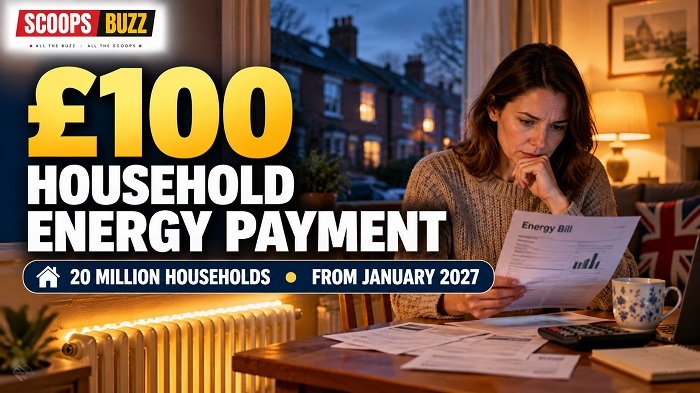
The biggest cost of living measure among the Budget 2026 key points is a one off £100 Household Energy Payment.
It will go to about 20 million households in council tax bands A to D and will be paid directly into bank accounts to help with energy bills this winter, from January 2027. The Treasury says it will cost about £2.6 billion.
You should not need to apply, but watch for scams. The government will not ask you to pay a fee or share your bank details by text or email to receive the money.
Gas Standing Charges Scrapped
Gas Standing Charges to Be Scrapped From 2027
The proposed Budget 2026 measure would remove fixed daily standing charges from gas bills, shifting these costs into the price households pay for each unit of gas used.
Potential Annual Savings
Around 60% of households could save an average of approximately £45 a year, according to Treasury estimates.
Homes With Gas Accounts
The proposed change could affect households across the UK that currently pay gas standing charges.
In one of the most popular Budget 2026 key points, Mr Healey said standing charges on gas bills will be scrapped from 2027.
Standing charges are the fixed daily fee you pay just to be connected, whether you use any gas or not. Under the plan, these costs will be moved into the price you pay per unit of gas instead.
The Treasury says about 23 million homes have gas accounts, and around 60% of households would save an average of about £45 a year. Homes that use a lot of gas could end up paying more, because the costs move onto each unit used.
Energy regulator Ofgem will be asked to make the change “in 2027 or as soon as possible after.” Removing the standing charge on electricity will take longer.
VAT on Electricity Stays at Zero
Zero VAT on Household Electricity Extended
The household electricity VAT cut from 5% to 0% will now continue until July 2027, rather than ending in March.
Electricity VAT remains at zero until July 2027.
Expected reduction in the Ofgem price cap from April 2027.
Alongside the £100 household payment and proposed gas standing charge changes, this measure aims to ease winter energy costs.
The VAT cut on household electricity, which brought the rate down from 5% to zero on 1 October, was due to end in March. It will now last until July 2027.
That is expected to take about £50 off the Ofgem price cap from April 2027.
Together with the £100 payment and the standing charge change, the government says these measures will ease pressure on bills during a winter of high energy prices. You can find more ways to cut costs in our guide to lowering heating bills.
Cash ISA Cut Reversed
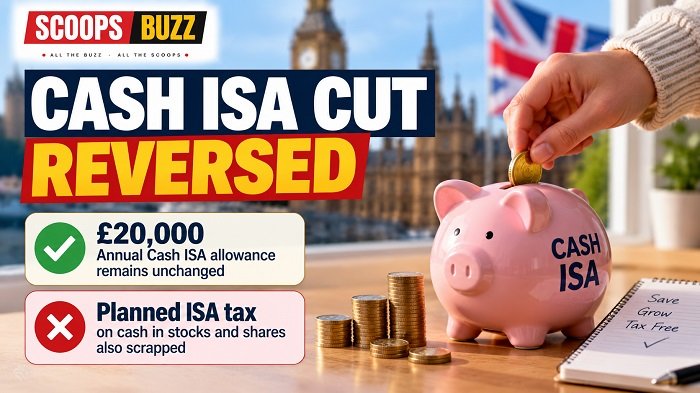
Savers got good news in the Budget 2026 key points. The planned cut to the Cash ISA allowance, which would have dropped it from £20,000 to £12,000 a year for under 65s from April 2027, has been scrapped.
That means everyone can keep putting up to £20,000 a year into a Cash ISA tax free.
A planned tax on cash held inside stocks and shares ISAs will also not go ahead. The government said it is exploring a new incentive, described as a “Starter ISA,” to encourage first time investors, but gave no details yet.
Income Tax: Thresholds Still Frozen
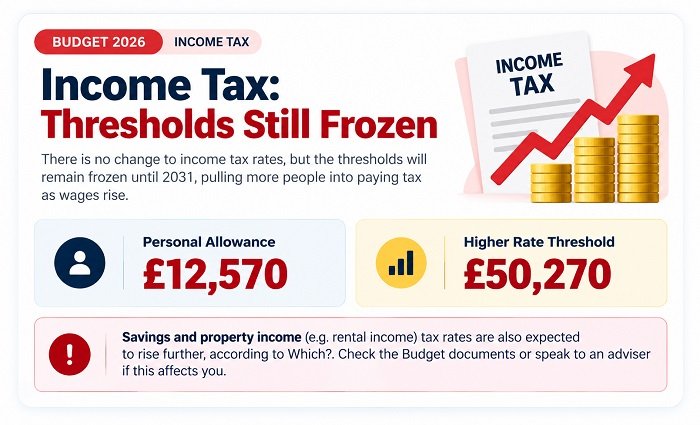
Among the Budget 2026 key points, there was no change to the main rates of income tax. But the thresholds remain frozen until 2031:
- Personal Allowance: £12,570
- Higher rate threshold: £50,270
As wages rise, more people will be pulled into paying tax or into the higher rate band. This “fiscal drag” is one of the main ways the government is raising money without changing headline tax rates.
According to consumer group Which?, tax rates on income from savings and property, such as rental income, are set to rise further. Check the Budget documents or speak to an adviser if this affects you.
Pensions: New Pension Tax Allowance
The full new State Pension is about to rise above the £12,570 Personal Allowance, which would have meant some pensioners owing income tax on their State Pension alone.
To stop that, Mr Healey announced a new Pension Tax Allowance, one of the most important Budget 2026 key points for retirees, which will run from 6 April 2027 to 5 April 2030. It effectively removes income tax on the gap between the full new State Pension and the Personal Allowance. It will be reduced for people with incomes just above the full State Pension and will rise each year.
Fuel Duty Frozen
Drivers were among the winners in the Budget 2026 key points, with no rise at the pump. Fuel duty stays frozen, and the temporary 5p a litre cut will remain until July 2027. Under previous plans, duty would have gone up by 3p in January.
The Chancellor also raised the business mileage rate for driving over 10,000 miles a year from 25p to 35p a mile, and made earlier increases permanent.
Minimum Wage Rises in April 2027
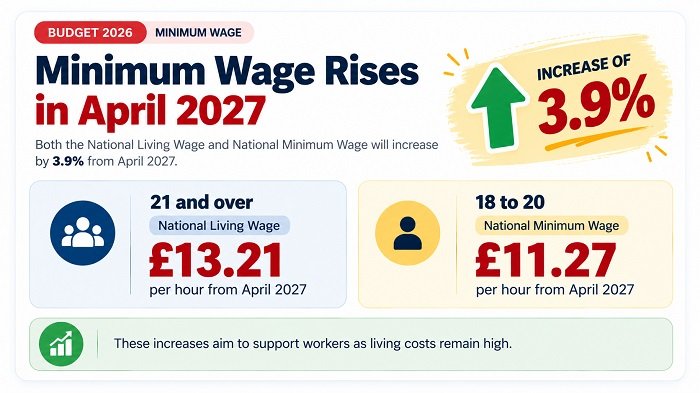
The National Living Wage and National Minimum Wage will both rise by 3.9% from April 2027:
| Age group | New hourly rate |
| 21 and over (National Living Wage) | £13.21 |
| 18 to 20 | £11.27 |
Housing and First Time Buyers
New Support for First-Time Home Buyers
The proposed housing measures aim to make buying a first home more accessible through lower deposits and a new savings scheme.
Your First Home Scheme
Minimum deposit for eligible new-build homes in England.
Government equity loan, with an interest-free period at the start.
Property price caps, depending on the London location.
Household income limits, with the higher limit for London.
Key Launch Dates
December 2026: Pre-registration opens.
February 2027: Applications begin.
April 2027: First loans expected.
First-Time Buyer ISA — From April 2029
£4,000 yearly savings with a 25% government bonus for eligible first-time buyers.
The scheme is intended for homes worth up to £450,000, with no upper age limit. It is planned to replace the Lifetime ISA.
The Budget 2026 key points also confirmed new help for people trying to buy their first home in England.
Your First Home scheme (new build homes in England):
- Minimum deposit of 2.5%
- Government equity loan of 20% of the price, with an interest free period at the start
- Price caps of £650,000 in inner London and £500,000 in outer London
- Household income limit of £110,000, or £140,000 in London
- Pre registration opens by the end of December 2026, applications from February 2027 and first loans from April 2027
First Time Buyer ISA: It will replace the Lifetime ISA from April 2029. Savers can put in £4,000 a year and get a 25% bonus, with no upper age limit, for homes worth up to £450,000.
Lifetime ISA holders also get a small win. From 29 October 2026, the penalty for using a Lifetime ISA on a first home worth more than £450,000 falls from 25% to 20%.
Help for Carers and Parents
Help for Carers and Parents
Payments will gradually reduce when earnings exceed the weekly limit, instead of stopping suddenly.
More parents, including self-employed fathers, could receive up to £194 a week for two weeks.
Prescription charges in England remain frozen for another year.
Several Budget 2026 key points are aimed at carers and families:
- Carer’s Allowance: The “cliff edge” will be replaced with a taper. At the moment, carers lose all their allowance if they earn even £1 over the weekly limit of £204. Under the new rules, it will be reduced by £1 for every £1 earned above the limit.
- Parental pay: Support will be extended to more than 150,000 extra parents a year, including self employed fathers, with two weeks of pay worth up to £194 a week.
- Prescriptions: The charge in England stays frozen at £9.90 for another year.
Bigger Tax on Banks
To help pay for the energy measures in the Budget 2026 key points, the bank surcharge will rise by 3 percentage points to 6%, on top of the 25% corporation tax rate. It will last 15 months from January.
Mr Healey said he was “grateful for the role” banks play, but argued they should contribute more while families face high bills.
Business and Hospitality
Key Business and Hospitality Changes
New business rates relief threshold for eligible retail, hospitality and leisure businesses.
Trading allowance rises from £1,000 from April 2027.
Potential grocery savings from tariff cuts on over 100 imported goods.
Also announced: £10 million in duty relief for smaller brewers and cider makers, higher machine games duty, VAT changes for online marketplace sellers, and a two-year real-terms rates freeze for other eligible businesses.
For businesses, the Budget 2026 key points include:
- Small business rates relief: The threshold for retail, hospitality and leisure businesses rises from £12,000 to £18,000, taking about 70,000 more businesses out of business rates.
- Other businesses in those sectors will have rates frozen in real terms for two years.
- Smaller brewers and cider makers get £10 million in alcohol duty relief.
- Machine games duty rises from 20% to 25%.
- Sellers on online marketplaces will be charged VAT.
- The trading allowance, which lets people earn a small side income tax free, triples from £1,000 to £3,000 from April 2027.
- Tariffs on more than 100 imported goods, including some foods, will be cut. The Treasury says that could save households up to £21 a year on groceries.
Defence and Ukraine
In one of the biggest spending items among the Budget 2026 key points, the UK will provide £10 billion in extra economic and military support to Ukraine, along with £500 million in urgent military funding this winter. A new defence finance taskforce will report before the next spending review.
Power for Mayors and Local Areas
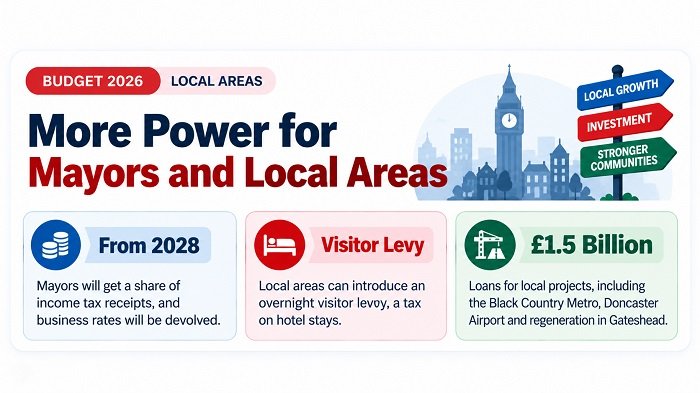
In line with his promise to “move money and power out of Westminster,” Mr Healey announced:
- From 2028, mayors will get a share of income tax receipts, and business rates will be devolved.
- Local areas will be able to introduce an overnight visitor levy, a tax on hotel stays.
- £1.5 billion in loans for local projects, including the Black Country Metro, the reopening of Doncaster Airport and regeneration in Gateshead.
What the OBR Forecasts Say
UK Economic Outlook at a Glance
Key forecasts for growth, inflation, borrowing and fiscal headroom.
Economic Growth Forecast (%)
Inflation and Borrowing (%)
Peak
2026
2029/30
Fiscal Headroom • 2029/30 (£bn)
Forecast
Forecast
Source: Figures supplied in the article. Bars are scaled separately within each chart.
The Office for Budget Responsibility published its new forecasts alongside the Budget 2026 key points.
| Forecast | Figure |
| Economic growth 2026 | 1.2% |
| Economic growth 2027 | 1.0% |
| Economic growth 2028 | 1.6% |
| Inflation peak | 3.8% in early 2027 |
| Borrowing 2026 | 4.2% of GDP |
| Borrowing 2029/30 | 2.1% of GDP |
| Fiscal headroom 2029/30 | £15 billion (down from £23.6 billion in March) |
The OBR expects inflation to peak at around 3.8% in the first three months of 2027, then fall gradually, though it warned the outlook depends heavily on oil and gas prices. It said the hit to the economy should be less severe than in 2022. Debt interest costs are expected to rise by about £14 billion this year, largely because of the Middle East conflict.
The government’s financial buffer, known as fiscal headroom, has shrunk. Mr Healey defended using part of it. “That is what a buffer is for. Use it when you need it. Rebuild it when you can,” he said.
The latest UK inflation figure was 3.5% in September, according to the Office for National Statistics.
What Happens Next: Interest Rates
After the Budget 2026 key points, attention now turns to interest rates. The Bank of England makes its next interest rate decision on Thursday, 5 November. With inflation rising, markets had expected a rate rise from 3.75% to 4% before the Budget. Economists will now look at whether the energy support measures change the Bank’s view.
Budget 2026 Key Points: What It Means for You
Here is a quick summary of how the Budget 2026 key points could affect different households:
| If you are… | What changes |
| A household in bands A to D | £100 energy payment this winter |
| A gas customer | Standing charges scrapped from 2027 |
| A saver | £20,000 Cash ISA limit kept |
| A driver | Fuel duty frozen until July 2027 |
| A low paid worker | Pay rise to £13.21 an hour from April 2027 |
| A pensioner | New Pension Tax Allowance from April 2027 |
| A first time buyer | Your First Home scheme and a new ISA |
| A carer | Carer’s Allowance taper instead of a cliff edge |
| A small business | Higher rates relief threshold |
More From ScoopsBuzz
- Autumn Budget 2026: what John Healey could announce
- How to lower heating bills this winter: 15 tips that work
Frequently Asked Questions
What are the Budget 2026 key points?
A £100 energy payment, gas standing charges scrapped from 2027, zero VAT on electricity until July 2027, the Cash ISA cut reversed, fuel duty frozen and a higher tax on banks.
Who gets the £100 energy payment?
About 20 million households in council tax bands A to D, paid into bank accounts this winter from January 2027.
Is the Cash ISA allowance being cut?
No. The planned cut has been scrapped, so the limit stays at £20,000 a year for everyone.
Will fuel duty go up?
No. Fuel duty is frozen and the 5p cut stays until July 2027.
What is the new minimum wage?
From April 2027, the National Living Wage rises to £13.21 an hour for workers aged 21 and over.
Did income tax go up?
Main rates did not change, but thresholds remain frozen until 2031.
When will gas standing charges end?
The government wants Ofgem to scrap them in 2027 or as soon as possible after.
Disclaimer: This article is for general information only and is not financial or tax advice.
Sources: HM Treasury, Office for Budget Responsibility, ITV News, Which?, Investment Week, Office for National Statistics


1 Comment