

Table of Contents
Winter is coming, and so are the heating bills. In the UK, the energy price cap went up again on October 1. In the US, homes that heat with oil or electricity are expected to pay more this winter than last.
The good news is that there are simple ways to lower heating bills without sitting in the cold. Many cost nothing at all, and others pay for themselves within one winter.
Here is what to expect from heating costs this winter in the UK and US, followed by 15 practical tips that really work.
Heating Costs This Winter: What to Expect
Energy prices this winter look different depending on where you live and how you heat your home.
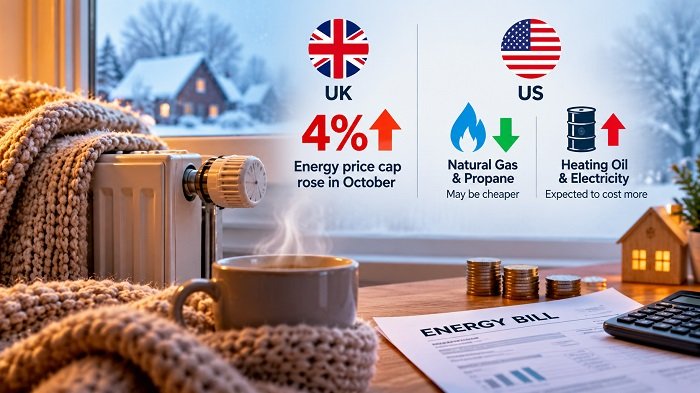
In the UK, most households are on a variable tariff controlled by the energy price cap, which rose 4% in October. In the US, the picture is mixed. Natural gas and propane users may pay a little less than last winter, while heating oil and electricity users are expected to pay more.
In both countries, heating is the single biggest part of most home energy bills in winter, which is why small changes can add up to real savings.
UK Energy Price Cap October 2026
Energy regulator Ofgem raised the energy price cap by 4% from October 1 to December 31, 2026. A typical household now pays £1,723 a year for gas and electricity.
| Price cap Oct to Dec 2026 | Electricity | Gas |
| Unit rate | 26.32p per kWh | 7.97p per kWh |
| Standing charge | 54.83p per day | 29.68p per day |
Ofgem blamed the rise on continued pressure on oil and gas supplies linked to the conflict in the Middle East. It is the second increase in a row. The comparison site Uswitch called it “another difficult winter” for households.
Remember that the cap limits the price you pay per unit of energy, not your total bill. If you use more energy, you pay more. Ofgem will announce the next cap, covering January to March 2027, in late November. You can follow updates on Ofgem’s energy price cap page.
US Winter Heating Costs 2026-2027
The US Energy Information Administration (EIA) published its winter fuels outlook on October 6. Here is what it expects for household heating spending compared with last winter.
| Heating fuel | Share of US homes | Expected spending this winter |
| Natural gas and propane | About half | Lower |
| Electricity | Many homes | Higher |
| Heating oil | About 3%, mostly Northeast | Highest increase |
The EIA expects heating oil prices to be about 21% higher than last winter, partly because fuel stocks on the East Coast are well below normal. Natural gas stocks are entering winter slightly above average, which should help keep gas bills in check.
The agency also warned that a strong El Niño could change the weather this winter, which would affect how much heat homes need. You can read the full forecast in the EIA’s winter fuels release.
15 Ways to Lower Heating Bills
| No. | Heating Bill Saving Tips |
|---|---|
| 1 | Turn Your Thermostat Down by One Degree |
| 2 | Lower It at Night and When You Are Out |
| 3 | Use a Programmable or Smart Thermostat |
| 4 | Heat the Rooms You Use |
| 5 | Block Drafts Around Doors and Windows |
| 6 | Close Curtains and Blinds at Dusk |
| 7 | Do Not Block Radiators or Vents |
| 8 | Bleed Your Radiators |
| 9 | Lower Your Boiler Flow Temperature (UK) |
| 10 | Change Your Furnace Filter (US) |
| 11 | Run Your Ceiling Fans in Reverse |
| 12 | Insulate Your Hot Water Tank and Pipes |
| 13 | Wear Layers and Use a Warm Blanket |
| 14 | Get Your Heating System Serviced |
| 15 | Shop Around or Switch Tariffs |
These tips work whether you live in a house in Ohio or a flat in Manchester. Start with the free ones.
1. Turn your thermostat down by one degree
This is the easiest way to lower heating bills. Most people do not notice a one-degree drop, but your boiler or furnace will. Try 18 to 20°C (64 to 68°F) when you are at home and awake.
2. Lower it more at night and when you are out
The US Department of Energy says turning your thermostat back 7 to 10°F (about 4 to 6°C) for eight hours a day can cut heating costs by up to 10% a year. Night time and work hours are perfect for this.
3. Use a programmable or smart thermostat
A smart thermostat does the work for you. It heats the home before you wake up or come home, and lowers the heat when nobody is there. Many energy companies offer them at a discount.
4. Heat the rooms you use
Turn down radiators or close vents in spare rooms, and keep those doors shut. There is no reason to heat a guest room every day.
5. Block drafts around doors and windows
Cold air sneaking in through gaps makes your heating work harder. Draft excluders for doors, self-adhesive foam strips for windows and a little caulk around frames are cheap and quick to fit.
6. Close curtains and blinds at dusk
Thick curtains act like an extra layer of insulation. Close them as soon as it gets dark, and open them on sunny days to let free heat in.
7. Do not block radiators or vents
Sofas and long curtains in front of radiators or heating vents trap warm air. Move furniture back a few inches so heat can flow into the room.
8. Bleed your radiators
If the top of a radiator feels cold while the bottom is warm, there is air trapped inside. Bleeding it with a radiator key takes a few minutes and helps the radiator heat the room properly.
9. Lower your boiler flow temperature (UK)
Many combi boilers are set hotter than they need to be. Lowering the flow temperature, often to around 60°C, can make a condensing boiler run more efficiently. Check your boiler manual first, and leave it alone if you have a hot water cylinder unless an engineer advises otherwise.
10. Change your furnace filter (US)
A dirty filter makes your furnace work harder. Check it every month in winter and replace it when it looks grey.
11. Run your ceiling fans in reverse
Warm air rises. Setting ceiling fans to spin clockwise on a low speed pushes that warm air back down without creating a chilly breeze.
12. Insulate your hot water tank and pipes
A jacket for an older hot water cylinder and foam lagging for exposed pipes cost very little and stop heat escaping before it reaches your taps.
13. Wear layers and use a warm blanket
It sounds obvious, but a warm jumper or sweater, thick socks and a throw on the sofa let you keep the thermostat lower without feeling cold.
14. Get your heating system serviced
A yearly service keeps a boiler or furnace running safely and efficiently. It can also catch small problems before they turn into expensive breakdowns in the middle of winter.
15. Shop around or switch tariffs
In the US, some states let you choose your energy supplier. In the UK, fixed deals are sometimes cheaper than the price cap. Compare offers before you sign, and check for exit fees.
Cheap Fixes to Lower Heating Bills Under $50 or £50
If you only have a small budget, these changes give the best return:
- Draft excluder for the front door
- Foam draft strips for windows
- Radiator key to bleed radiators
- Pipe lagging and a hot water tank jacket
- Reflective radiator panels behind radiators on outside walls
- A thick blanket or heated throw, which uses far less energy than heating a whole room
Bigger Upgrades That Lower Heating Bills for Years
If you own your home and plan to stay, these upgrades can pay for themselves over time.
Loft or attic insulation. A large share of a home’s heat can escape through the roof. Topping up insulation is one of the best value upgrades.
Wall insulation. Cavity wall insulation in the UK, or adding insulation during renovations in the US, keeps heat in all winter.
Better windows and doors. Double or triple glazing reduces heat loss and drafts, though it is more expensive.
Heat pumps. Heat pumps use electricity to move heat from the air or ground into your home, and they can be much more efficient than older systems. In the UK, the Boiler Upgrade Scheme offers grants toward the cost. In the US, some states and utilities offer rebates. Check what is available in your area before you buy.
Help With Heating Bills in the UK and US
If you are struggling to pay, help is available.
In the UK:
- The Warm Home Discount gives eligible households, mainly those on certain benefits, a discount on their electricity bill over winter.
- The Winter Fuel Payment helps many people over State Pension age with heating costs.
- Contact your energy supplier early if you fall behind. Suppliers must offer payment plans and support to customers in difficulty.
In the US:
- The Low Income Home Energy Assistance Program (LIHEAP) helps eligible households pay heating bills. Apply through your state or local agency.
- Many utilities offer budget billing, which spreads your winter costs evenly over the year.
- Ask your utility about weatherization programs, which can provide free insulation and draft proofing for qualifying homes.
Heating Myths That Cost You Money
Myth: Leaving the heating on low all day is cheaper. For most homes, heating only when you need it uses less energy overall. Homes with heat pumps are the exception, since they work best at a steady temperature.
Myth: Turning the thermostat up high heats the room faster. It does not. Your system heats at the same speed. It just keeps going until it reaches the higher temperature, wasting energy.
Myth: Space heaters always save money. A small electric heater can help in one room for a short time, but using several for hours can cost more than central heating, especially where electricity is expensive. Never leave one running unattended.
More From ScoopsBuzz
- Flu season 2026: who should get the flu shot in the US and UK
- iPhone Duo is out today: price, specs and delivery dates
Frequently Asked Questions
What is the best way to lower heating bills?
Turning your thermostat down by one degree, heating only the rooms you use and blocking drafts are the quickest and cheapest ways to lower heating bills.
What temperature should I set my thermostat to in winter?
Around 18 to 20°C (64 to 68°F) while you are home and awake, and lower at night or when you are out.
What is the UK energy price cap for October 2026?
The cap is £1,723 a year for a typical household, up 4%, from October 1 to December 31, 2026.
Will heating costs go up in the US this winter?
It depends on your fuel. The EIA expects higher spending for heating oil and electricity, and lower spending for natural gas and propane.
Is it cheaper to leave the heating on all day?
For most homes with boilers or furnaces, no. Heating only when needed usually costs less. Heat pumps are an exception.
Do smart thermostats save money?
Yes, for most people. They make it easy to lower the heat when you are asleep or away, which is where the biggest savings come from.
Sources: Ofgem, Uswitch, US Energy Information Administration, US Department of Energy